
Table of Contents
Title: Must-Know Facts About Synthetic vs Leather Juttis
Meta Description: Stuck choosing between synthetic vs leather juttis? Our detailed guide compares comfort, durability, ethics, and style to help you pick the perfect pair of traditional juttis.
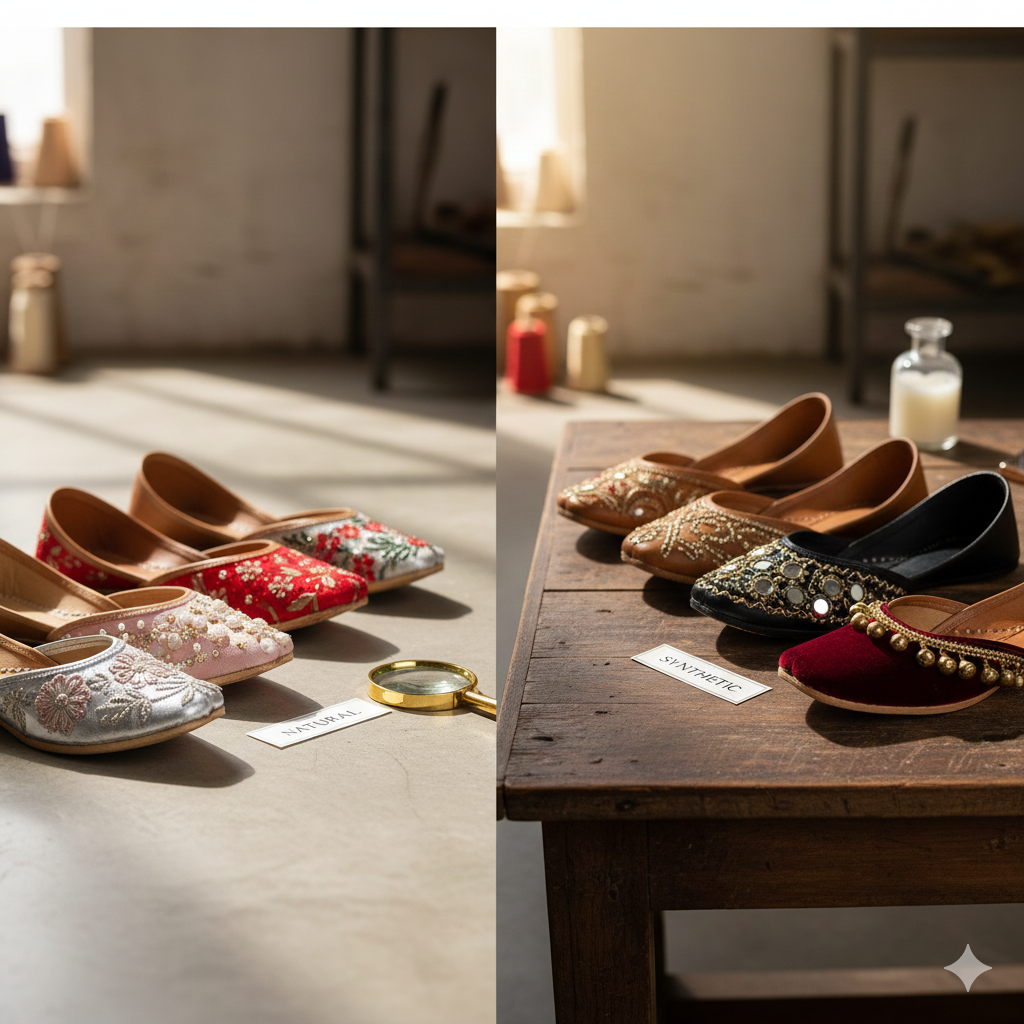
(Image 1: A high-quality, stylish collage split down the middle. On the left, a pair of glossy, brightly colored synthetic juttis. On the right, a pair of rich, textured, natural leather juttis. Caption: The Great Debate: Synthetic vs Leather Juttis – Where does your loyalty lie?)
Introduction: Stepping Into the World of Ethnic Shoes
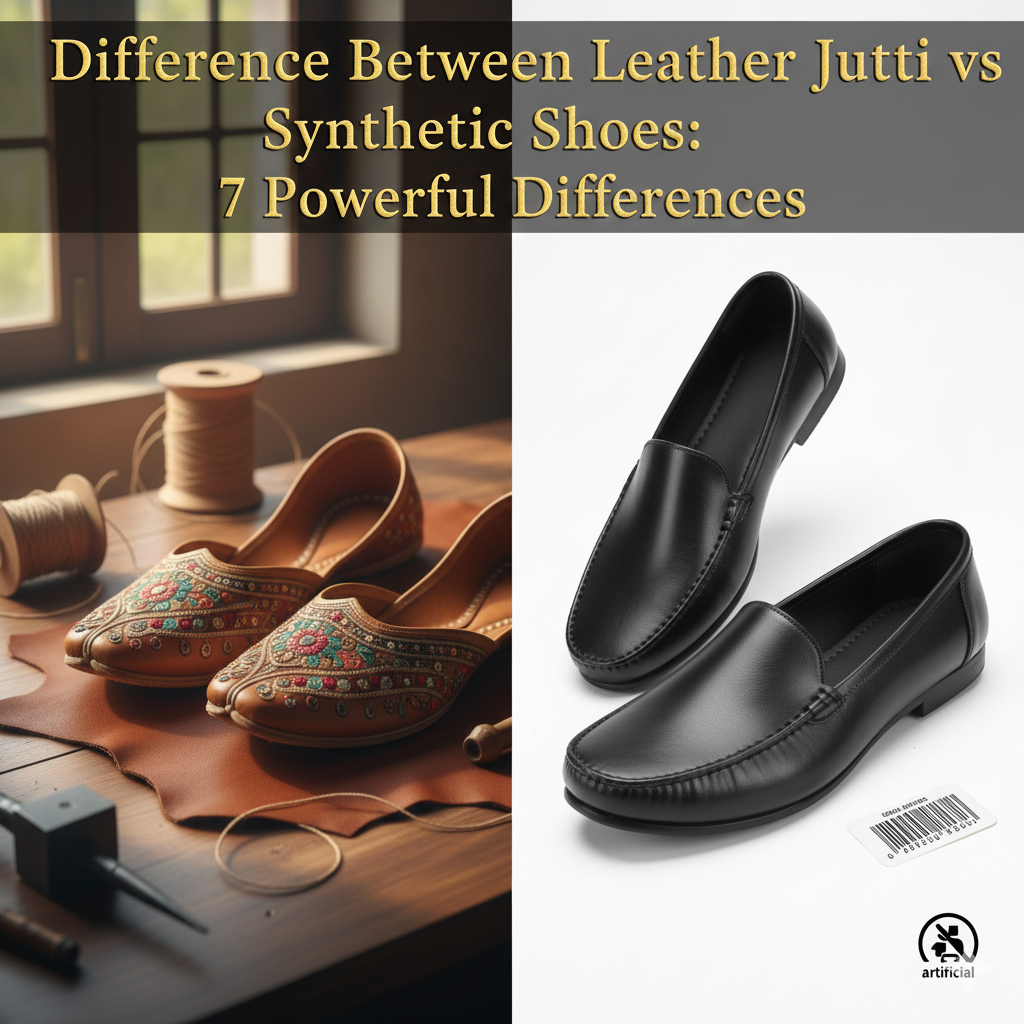
The search for the perfect pair of traditional juttis is a journey. It’s about finding that ideal blend of style, comfort, and heritage. Today, this search brings us to a modern crossroads: synthetic vs leather juttis.
This isn’t just a choice between two materials. It’s a decision that touches on comfort, ethics, budget, and personal values. Do you choose the timeless, breathable nature of leather? Or the innovative, vibrant appeal of synthetic materials?
This guide will walk you through every detail. We’ll explore the core of this debate. You’ll learn what defines each type. We will compare them across key factors. Our goal is simple. We want to equip you with all the facts. This knowledge will help you make an informed, confident choice for your next pair of ethnic shoes.
Chapter 1: Understanding the Contenders – A Deep Dive into Materials(synthetic vs leather juttis)
Before comparing, we must understand what we’re dealing with. The terms “leather” and “synthetic” encompass a wide range of qualities and types.
What Are Genuine Leather Juttis?
Leather juttis are crafted from animal hide, typically goat, cow, or buffalo. The process is ancient and skilled. It involves tanning and treating the skin to prevent decay.
- Full-Grain Leather: The highest quality. It uses the top layer of the hide, including natural markings and grain. It’s incredibly durable and develops a beautiful patina over time.
- Top-Grain Leather: Slightly sanded to remove imperfections. It’s more uniform but still high-quality and common in premium traditional juttis.
- Genuine Leather: A basic grade from the lower layers of the hide. It’s still real leather but less durable and breathable than top or full-grain.
Leather is a natural, porous material. It interacts with your environment and your feet.
What Are Synthetic Juttis?
Synthetic juttis are made from human-made materials. These are designed to mimic the look and feel of leather.
- PU (Polyurethane): A common, affordable option. It can be made to look very similar to leather and is easy to clean.
- PVC (Polyvinyl Chloride): Another plastic-based material. Often used for more glossy, waterproof finishes but less breathable.
- Vegan Leather: An umbrella term for non-animal materials. This can include PU, PVC, and innovative new materials like pineapple leaf fiber (Piñatex) or apple peel.
Synthetics offer consistency and open the door to bold, uniform designs.
(Image 2: A close-up, detailed shot of two material swatches. One shows the rich, uneven grain and pores of natural leather. The other shows the uniform, smooth texture of a high-quality synthetic/PU material. Caption: The Texture Tale – Natural grain vs. engineered perfection.)
Chapter 2: The Ultimate Showdown – Synthetic vs Leather Juttis Compared
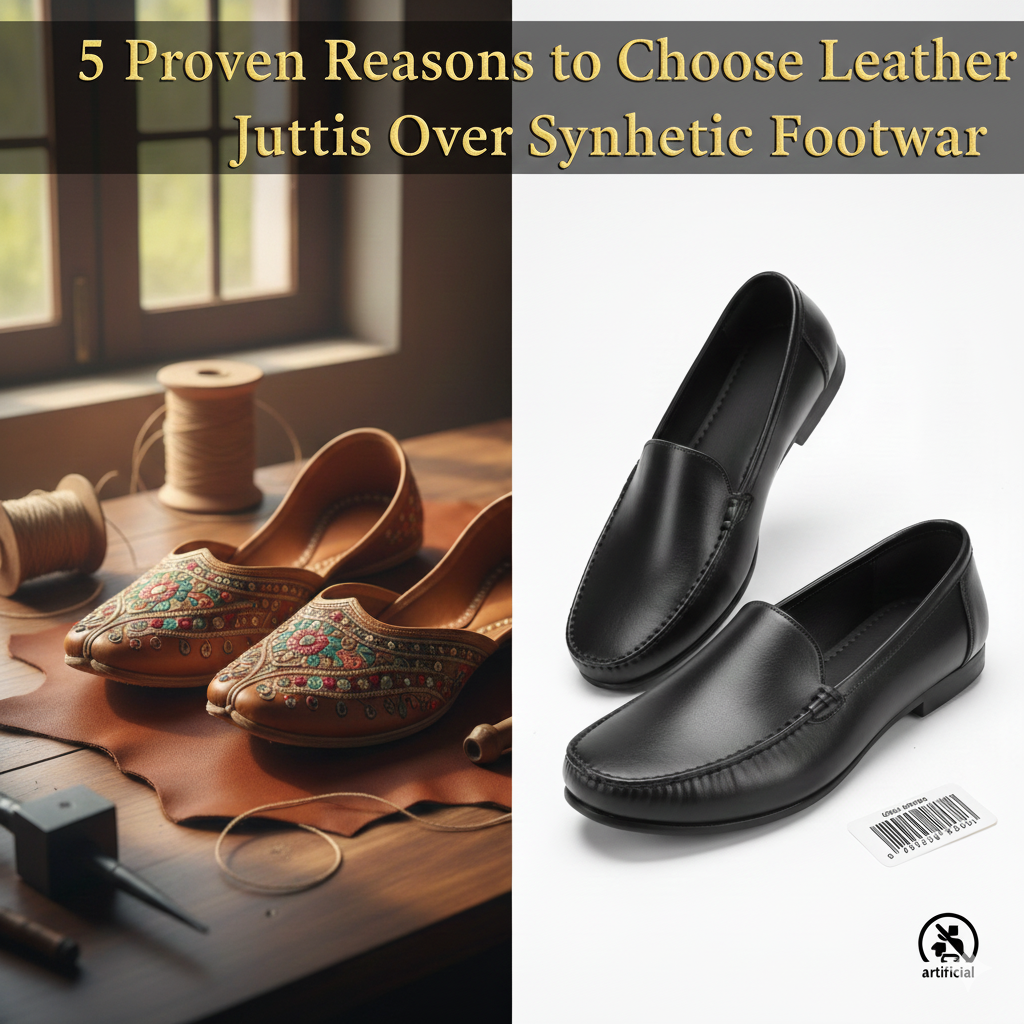
Let’s place synthetic and leather juttis side-by-side. We will evaluate them across the factors that matter most to you as a wearer.
1. Comfort and Breathability
This is where a major difference lies.
- Leather Juttis: Leather is breathable. Its natural pores allow air to circulate around your foot. This helps wick away moisture and keeps your feet cooler and drier, especially in warm climates. Over time, leather molds to the shape of your foot, offering a personalized, glove-like fit.
- Synthetic Juttis: Most synthetic materials are non-porous. They trap heat and moisture inside. This can lead to sweaty, uncomfortable feet during extended wear. They also lack the same molding ability, often retaining their original shape.
Verdict: For all-day comfort and breathability, leather juttis have a clear, natural advantage.
2. Durability and Longevity
How long will your ethnic shoes last?
- Leather Juttis: High-quality leather is incredibly durable. It can withstand years of use if cared for properly. Scratches and scuffs can often be buffed out. Leather actually ages beautifully, gaining character with time.
- Synthetic Juttis: Synthetic materials can be prone to cracking and peeling, especially along crease lines. Once the top layer is damaged, it cannot be repaired. Their lifespan is generally shorter than that of well-made leather.
Verdict: For long-term investment and durability, leather juttis are the winners. They are built to last for seasons.
3. Cost and Value
Budget is a key practical concern.
- Leather Juttis: They are typically more expensive upfront. You are paying for a natural material and often, more skilled craftsmanship. However, their longevity can make them more cost-effective per wear over many years.
- Synthetic Juttis: They are almost always more affordable. This makes them accessible and perfect for someone who wants trendy styles without a big commitment. It’s a lower initial investment.
Verdict: Synthetic wins on upfront cost. Leather wins on long-term value. Your choice depends on your budget horizon.
(Image 3: A flat lay photograph featuring two well-worn pairs of juttis. The leather pair looks polished and elegant, with a soft patina. The synthetic pair shows clear signs of cracking at the toe bend. Caption: The Test of Time – How materials age with wear.)
4. Style, Variety, and Aesthetics
Both types offer distinct visual appeals.
- Leather Juttis: They offer a classic, rich, and earthy aesthetic. The colors are often deeper and more natural. The grain variations make each pair unique. They excel in traditional and minimalist designs.
- Synthetic Juttis: The champion of versatility and boldness. They can be produced in any color—from metallics to neon—with perfect consistency. They allow for intricate printed patterns, embroidery on smoother bases, and glossy finishes that are hard to achieve with leather.
Verdict: It’s a tie. Choose leather juttis for timeless, organic elegance. Choose synthetic juttis for bold, contemporary, and experimental style.
5. Maintenance and Care
Keeping your juttis looking their best requires different approaches.
- Leather Juttis: They require more attentive care. Regular conditioning with leather cream is needed to prevent drying and cracking. They should be kept dry and stored properly. It’s a relationship.
- Synthetic Juttis: They are famously low-maintenance. A simple wipe with a damp cloth is usually enough to clean them. They are more resistant to immediate water damage, though not always waterproof.
Verdict: For easy, wipe-and-go care, synthetic juttis are the most convenient option.
Chapter 3: Beyond the Material – Ethical and Environmental Considerations
The choice between synthetic vs leather juttis often goes deeper than personal comfort. It touches on ethics and the environment.
The Leather Debate:
- Pros: It’s a natural, biodegradable material when treated with vegetable tannins. It’s often a by-product of the meat industry, utilizing hides that would otherwise go to waste.
- Cons: The tanning process, especially chrome tanning, can be highly polluting if not managed responsibly. Ethically, it is not an option for vegans or those opposed to animal products.
The Synthetic Reality:
- Pros: It is cruelty-free and vegan by definition. No animals are used in its production.
- Cons: Most synthetics are petroleum-based plastics. They are not biodegradable and can take centuries to break down in landfills. Their production also has a significant carbon footprint.
The Middle Path: Look for responsible brands. Seek out vegetable-tanned leather or recycled synthetic materials. Transparency is key.
Chapter 4: How to Make Your Perfect Choice – A Practical Guide
Now that you know the facts, how do you decide? Ask yourself these questions:
1. What is my primary use for these juttis?
- Daily Wear & Comfort: Prioritize leather juttis for breathability.
- Occasional/Event Wear: Synthetic juttis are perfect for making a style statement.
- Long-Term Investment: Choose high-quality leather juttis.
- Frequent New Styles: Affordable synthetic juttis let you rotate trends.
2. What is my climate?
- Hot & Humid: Breathable leather juttis will be far more comfortable.
- Temperate or Occasional Use: Synthetic juttis can work well.
3. What are my personal values?
- Are vegan principles paramount? Choose high-quality synthetic or innovative plant-based materials.
- Do you value natural, biodegradable products? Opt for responsibly sourced, vegetable-tanned leather.
4. What is my budget?
- Be honest about what you can spend now and what you expect in return.
(Image 4: An illustrated flowchart or simple infographic titled “Find Your Perfect Jutti.” It asks: “Need for daily comfort? -> Leather. Want bold, trendy colors? -> Synthetic. Budget-focused for one season? -> Synthetic. Investing for years? -> Leather. Vegan? -> Synthetic.” Caption: Your quick-guide to choosing between synthetic and leather juttis.)
Chapter 5: Pro Tips for Buying and Caring
Buying Tips:
- For Leather: Smell it. Real leather has a distinct, rich, earthy smell. Check for natural grain inconsistencies. Feel the weight and suppleness.
- For Synthetic: Check the lining. A fabric lining can improve breathability. Examine seams and stress points for quality of construction. Feel the material—higher-end PU can feel surprisingly soft.
- For Both: Always check the sole. A stitched-on sole (especially for leather) is a mark of better craftsmanship than a purely glued one.
Care Tips:
- Leather Care: Use a soft cloth and leather conditioner. Keep them away from direct heat. Use shoe trees to maintain shape. Address stains immediately.
- Synthetic Care: Wipe with a mild soap solution. Avoid harsh chemicals that can strip color. Let them air dry, not on a heater.
Conclusion: The Soleful Decision – There Is No “Wrong” Choice
The debate between synthetic vs leather juttis doesn’t have a single winner. It has a winner for you, based on your unique needs.
Choose Leather Juttis if: You prioritize comfort that lasts all day, you view your ethnic shoes as a long-term investment, you love the character of natural materials, and you don’t mind a little maintenance for a greater reward.
Choose Synthetic Juttis if: You want the latest colors and trends at an accessible price, you need easy-care footwear, you adhere to a vegan lifestyle, or you’re buying for occasional, specific outfits.
The world of traditional juttis has beautifully expanded. It now embraces both heritage and innovation. Whether you walk the path of timeless leather or the vibrant road of synthetic, the most important thing is that your choice brings confidence and joy to every step you take.
(Image 5: A joyful, well-styled photograph of a person’s feet wearing a beautifully detailed pair of juttis, stepping onto a colorful rug or traditional flooring. The focus is on the elegance and style of the footwear in a real-life context. Caption: The final step is yours – choose the juttis that tell your story.)
Note on Images: For an actual blog, you would source or create high-resolution, original images corresponding to the descriptions provided (the collage, material close-up, worn-in comparison, infographic, and lifestyle shot). Ensure images have descriptive, keyword-rich file names (e.g., synthetic-vs-leather-juttis-comparison.jpg) and alt text for SEO.