
Table of Contents
Origin of Rajasthani Juttis: 5 Incredible Secrets of a Forgotten Royal Art
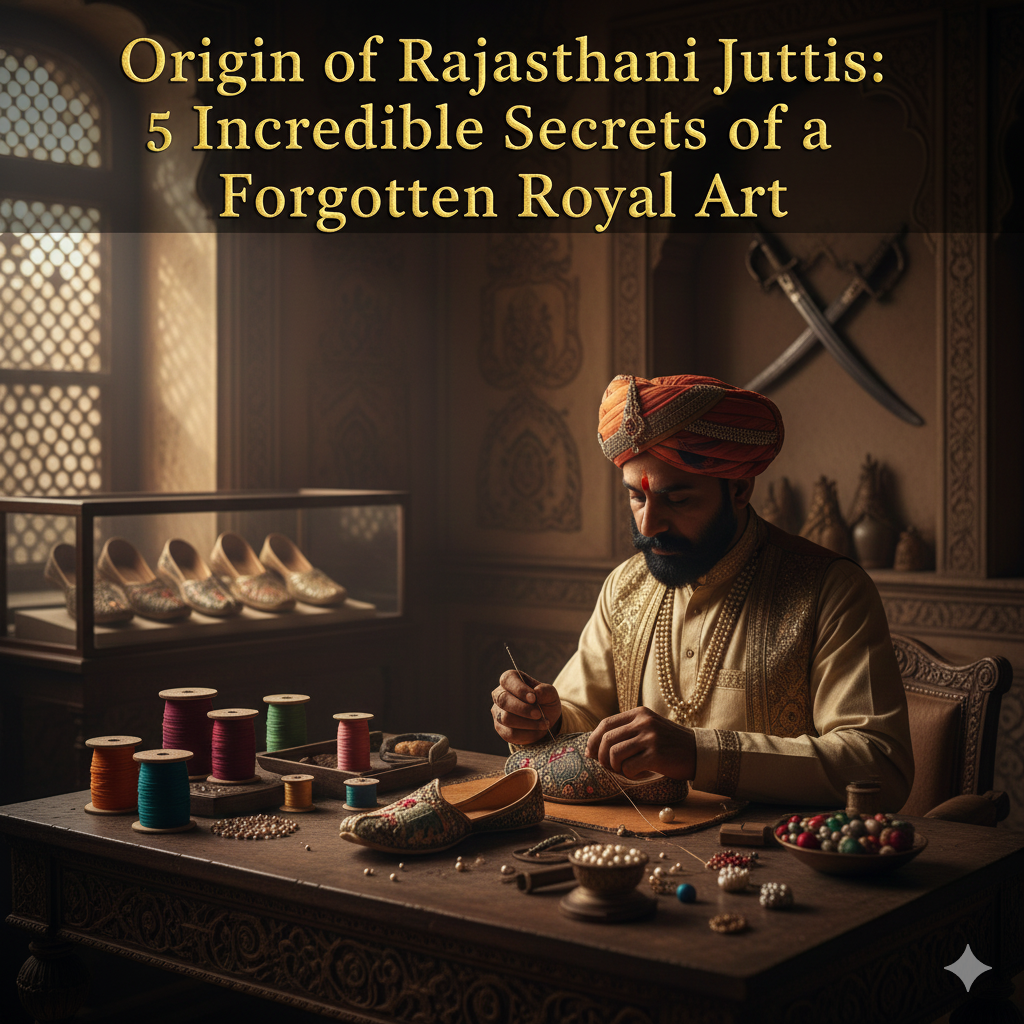
The sweeping deserts of Rajasthan hold more than just tales of valor and romance. They cradle the secrets of an ancient craft that once graced the feet of royalty. The origin of Rajasthani juttis is a story woven with threads of history, culture, and impeccable artistry. These are not mere Indian footwear. They are portable masterpieces, each pair whispering legends of a regal past.
Today, we pull back the ornate curtain to reveal five incredible secrets of this forgotten royal art. We trace the journey of these traditional shoes from the marble palaces of kings to the global fashion runways. This is a deep dive into a craft that defines elegance.
The Royal Genesis: Where Did It All Begin?
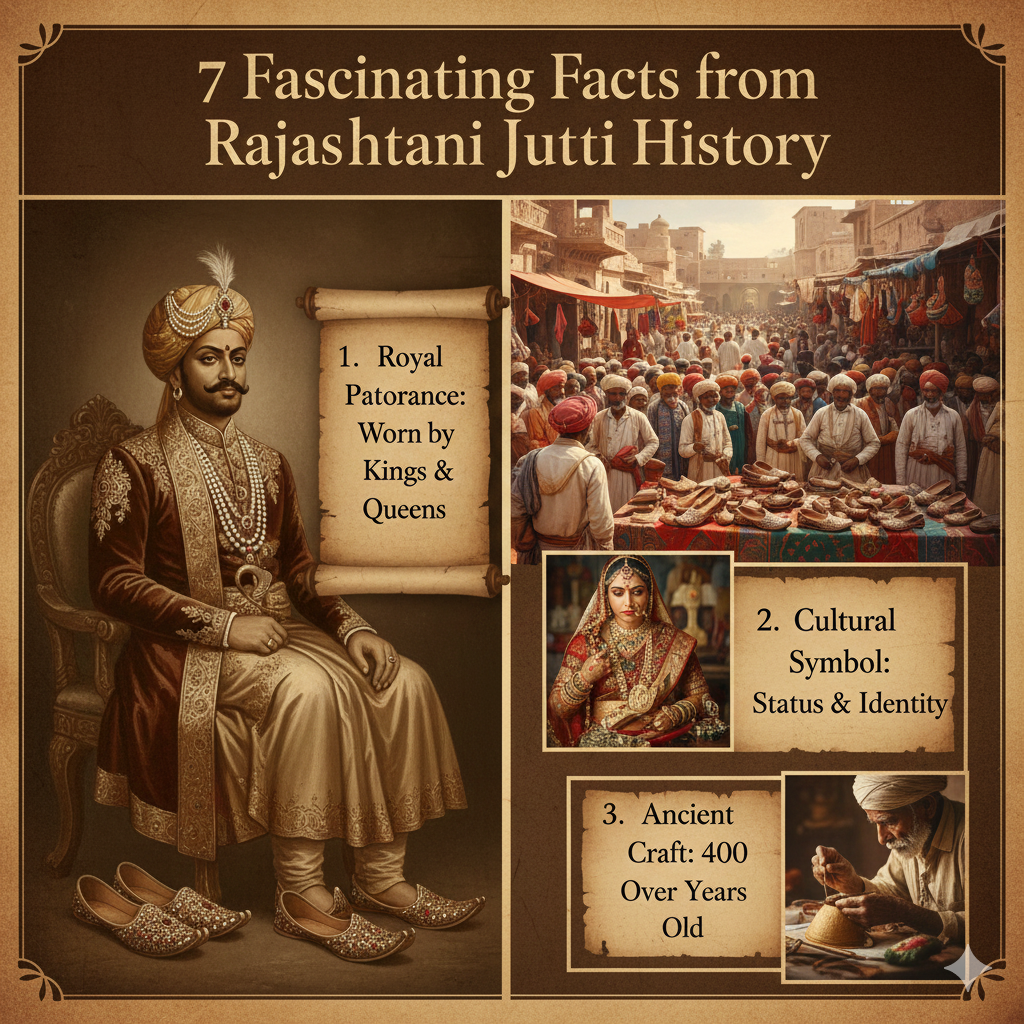
The origin of Rajasthani juttis is deeply entwined with the Rajput courts of the 16th and 17th centuries. This was an era of immense cultural synthesis. As Mughal influence flourished, a beautiful fusion occurred. Persian aesthetics met indigenous Indian craftsmanship. The royal “karkhanas” or workshops became innovation hubs.
Artisans, known as ‘Mochis’, were highly respected. They enjoyed patronage from maharajas who demanded both luxury and practicality. The desert terrain necessitated sturdy, fully-covered traditional shoes. Yet, royal vanity demanded splendor. Thus, the jutti was born—a closed-toe shoe with a curled front.
It protected feet from the harsh, hot sand. Simultaneously, its surface became a canvas for extraordinary embellishment. This period marked the true crystallization of these Indian footwear as symbols of status. They were markers of identity and power.
Secret #1: The Hidden Language of Symbols & Stitches
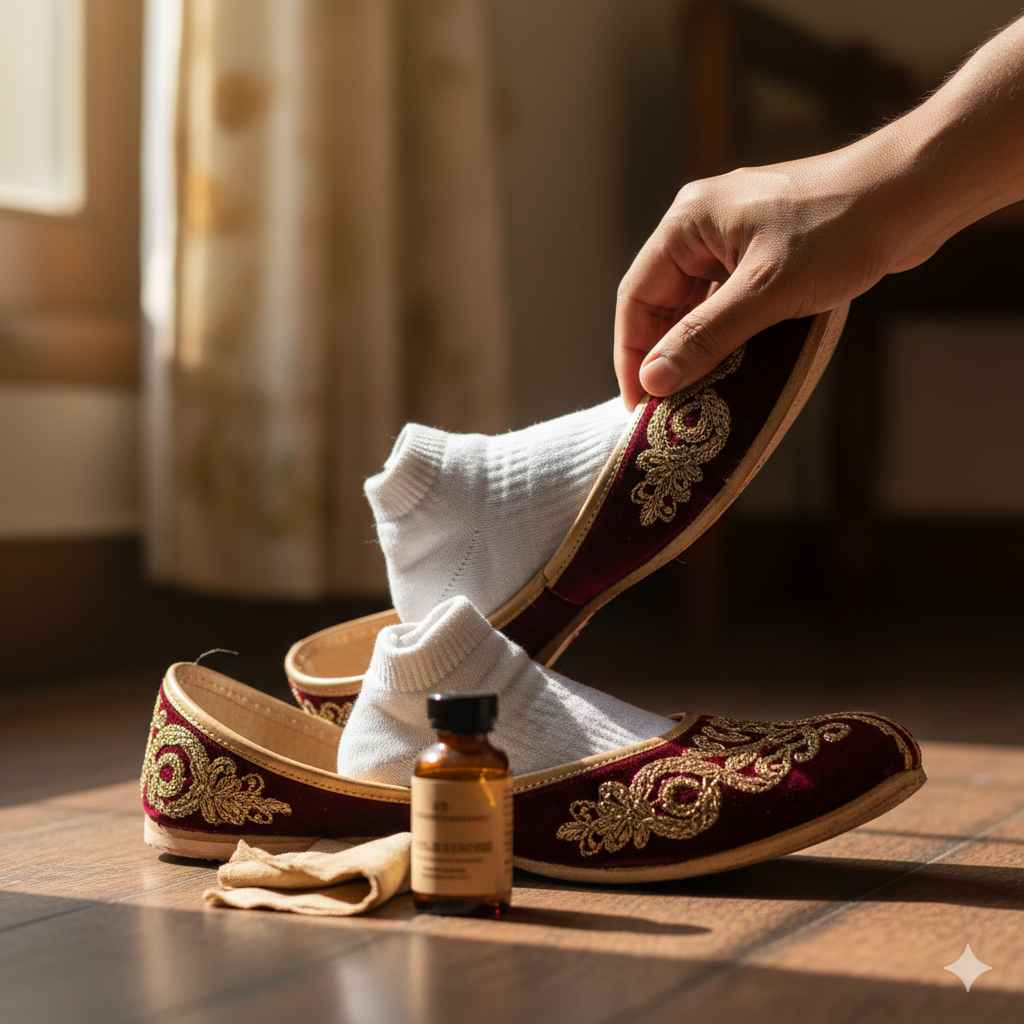
Every motif on a Rajasthani jutti tells a story. This is one of the best-kept secrets of its origin. The embroidery was never arbitrary. It was a coded language of symbolism and heritage. The recurring ‘Kalash’ or pot symbolizes prosperity and abundance.
The ‘Mor’ or peacock denotes beauty and grace. It was often worn by women. Intricate ‘Bel’ or creeper patterns represent longevity and eternity. Floral motifs like the ‘Gulab’ (rose) spoke of love. The ‘Chand’ (moon) symbolized coolness and calm.
The stitches themselves held profound meaning. The ‘Mochi Bharat’ or chain stitch, done with an awl, was a specialty. It created dense, raised patterns that could withstand wear. Gold and silver ‘zari’ threadwork, called ‘Gota’, was reserved for nobility.
It reflected sunlight, making the wearer literally shine. This symbolic vocabulary transforms Indian footwear into a narrative device. Wearing them was like carrying a story on your feet. It was a silent communication of one’s lineage and values.
The Anatomy of Elegance: More Than Just Pretty Shoes
Understanding the origin of Rajasthani juttis requires a look at their unique construction. Unlike Western shoes, traditional juttis are minimalist and flexible. They are shaped by a single piece of leather or fabric. This upper is stitched to a sturdy leather sole.
There is no left or right distinction initially. The shoes mold to the wearer’s feet over time. They become personalized and incredibly comfortable. The upturned toe, or ‘Pahali’, isn’t just decorative. It has practical and spiritual significance.
It prevents the front of the shoe from dragging. Some believe it helps conserve energy by not scuffing the earth. The absence of a heel made them ideal for long palace courtyards. They were perfect for sedentary court life.
This thoughtful design highlights how these traditional shoes married form with function. They were engineered for the desert climate and royal lifestyle. Every curve served a purpose beyond beauty.
Secret #2: The Mystical Power of Materials
The choice of materials reveals another layer of the origin of Rajasthani juttis. Leather from goats, camels, and sheep was preferred. It was tanned using natural, age-old methods. Often, ‘Rohida’ or Marwar teak tree bark was used in tanning.
This gave the leather a distinctive aroma and durability. For the elite, velvet, brocade, or silk formed the upper base. But the real secret lies in the adornments. Semi-precious stones, pearls, and even gold were used.
‘Salma’ and ‘Sitara’ (metal thread and sequins) created shimmering effects. Natural dyes from pomegranate, indigo, and turmeric provided vibrant colors. Each material was chosen not just for beauty. It was believed to carry specific properties.
Certain stones were thought to have cooling effects. Colors held symbolic meaning—saffron for courage, red for matrimony. This made the Indian footwear a talisman of sorts. It was armor for the feet, blending protection with opulence.
The Caste of Craftsmen: Guardians of the Legacy
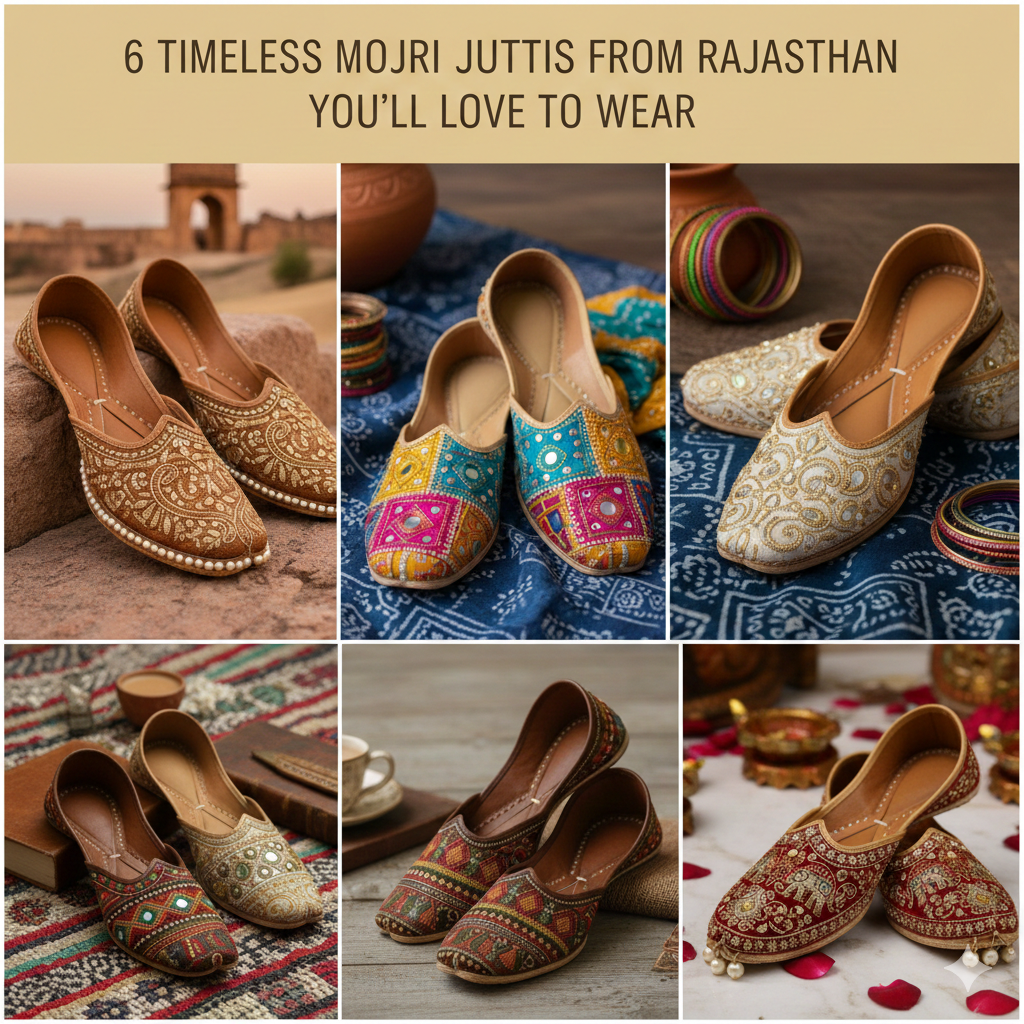
The origin of Rajasthani juttis is inseparable from the ‘Mochi’ community. These master shoemakers belonged to a specific caste. They were dedicated to the art of leatherwork. Their skills were passed down orally across generations.
In royal times, they were often bound to the kingdom. They created juttis as per royal decree. They were paid from the state treasury. Their workshop was considered a sacred space. Tools were simple but incredibly effective.
The ‘aari’ (awl), ‘sui’ (needle), ‘chimta’ (plier), and ‘rampi’ (wooden stand) were key. The training was rigorous and lengthy. An apprentice spent years mastering just one element. This could be embroidery or leather cutting.
This deep specialization ensured unparalleled quality. It cemented the legacy of these traditional shoes as peerless artifacts. The Mochi was not just a cobbler. He was an artist and historian preserving culture.
Secret #3: The Gender Divide in Design & Craft
A fascinating secret in the origin of Rajasthani juttis is the stark gender divide. Men’s and women’s juttis were worlds apart in design. Men’s juttis, like the famous ‘Jodhpuri’ style, were often more structured. They featured bold colors and geometric patterns.
The ‘Mojari’, popular in North India, evolved from these. Women’s juttis were more delicate and ornate. They featured finer embroidery and floral motifs. They often had a higher, more decorated front.
The craftsmanship itself had gendered roles. Men typically handled the leather cutting. They constructed the sole and main body. Women in artisan families contributed to the embroidery. They added minute, detailed work from within their homes.
This collaborative, gendered creation process was vital. It made each pair of Indian footwear a product of collective familial artistry. The jutti became a symbol of family unity and shared heritage.
Regional Styles: A Map Woven in Leather
A key aspect of the origin of Rajasthani juttis is regional diversity. Across Rajasthan, different cities developed signature styles. These variations were influenced by local culture and resources. The ‘Jodhpuri Mojari’ is perhaps the most famous.
It is known for its extended, pointed toe. It features extensive embroidery and often a thicker sole. ‘Udaipuri juttis’ are celebrated for their use of mirrors. ‘Shisha’ work reflects light beautifully. Bright threads create a dazzling effect.
‘Jaipuri juttis’ often feature delicate ‘zardozi’. This is the art of sewing with gold and silver thread. Precious stones are often added for extra luxury. The ‘Nagauri’ style from Nagaur is heavier and more rustic.
It uses thicker leather suited for agrarian communities. The ‘Shekhawati’ region produces distinct geometric patterns. Recognizing these subtleties is crucial. It helps appreciate the diversity of this Indian footwear.
Each style is a geographic signature. It tells you where the wearer, or the artisan, hailed from. These traditional shoes were a marker of regional identity. They displayed local pride and artistic preference.
The Decline & The Renaissance: A Journey Through Time
The origin of Rajasthani juttis as royal wear faced a stark decline. This happened post-Indian independence in 1947. The Privy Purse to royalty was abolished. Patronage for many traditional arts dwindled rapidly.
The Mochi community faced severe economic hardship. Many were forced to abandon their craft. They took up daily wage labor for survival. The art of making these traditional shoes was on the verge of extinction. It was a dark period for this heritage.
However, the late 20th century saw a remarkable renaissance. The global Bohemian and ethnic fashion movements discovered juttis. Tourists to Rajasthan fell in love with their comfort and beauty. Designers began incorporating them into contemporary fashion.
This commercial demand provided a new lease of life. It revived the craft and gave economic sustenance to the artisans. Non-profits and government schemes also offered support. The origin of Rajasthani juttis found a new chapter.
Secret #4: The Rituals & Superstitions Surrounding Juttis
The final secret of the origin of Rajasthani juttis lies in rituals. New juttis are often touched to the feet of elders for blessings. In some communities, they are an essential part of the bridal trousseau. The bride receives several pairs for different occasions.
It is considered auspicious for the groom’s family to gift juttis. This symbolizes welcome and care. There are interesting superstitions too. Dropping a jutti is considered inauspicious. It is seen as a sign of impending bad luck.
Pointing the soles of one’s juttis towards someone is disrespectful. It is akin to showing the bottom of your feet. These beliefs highlight cultural depth. They show how deeply these items are woven into the social fabric.
They are not just Indian footwear but carriers of cultural ethos. They participate in life’s ceremonies from birth to marriage. They are embedded in the ritualistic framework of society. This elevates them from mere accessories to sacred objects.
Juttis on the Global Stage: From Palaces to Pavements
Today, the journey from the origin of Rajasthani juttis is remarkable. They have transcended their traditional shoes label. International celebrities and fashion icons have been spotted wearing them. They appear in high-fashion editorials and on red carpets.
High-end designers collaborate with Rajasthani artisans. They create limited editions for global audiences. These traditional shoes are now paired with jeans, dresses, and wedding gowns. They represent a blend of heritage and contemporary style.
This global appeal lies in their unique value proposition. They are sustainable and handcrafted. They are often vegan-friendly when made with fabric. They are incredibly comfortable and promote good foot health.
The flat, flexible sole aligns with modern podiatric advice. Each pair remains unique due to the handmade process. In a world of mass production, this individuality is priceless. The origin of Rajasthani juttis now speaks a global language.
It is a language of conscious consumption and artisanal pride. It connects a wearer in New York or Paris to a craftsman in Jaipur. This global network is the new patronage system. It ensures the survival of this beautiful craft.
The Socio-Economic Impact of the Craft Revival
The revival of interest in the origin of Rajasthani juttis has tangible impacts. It provides livelihood to thousands of artisan families. It empowers women who work from home on embroidery. It brings financial stability to rural communities.
Cooperatives and designer collaborations ensure fair wages. They often provide advances and consistent orders. This stability allows younger generations to consider the craft. They see a future in their heritage, preventing a skills gap.
The economic model is evolving. Artisans are now also taught basic business skills. They learn about costing, marketing, and direct sales. This empowers them beyond mere wage labor. They become entrepreneurs of their own legacy.
The craft’s revival has a ripple effect. It supports allied industries like leather tanning, thread making, and stone cutting. The entire ecosystem benefits from the sustained demand for these traditional shoes. It is a model of cultural sustainability.
The Making Process: A Labor of Love
To truly appreciate the origin of Rajasthani juttis, understand the process. It starts with the ‘Chhapai’ or tracing the design on leather. The base leather is selected and cut to size. The ‘Kashida’ or embroidery is then painstakingly done.
This can take anywhere from a day to several weeks. For elaborate pieces, months of work can go into a single pair. After embroidery, the upper is attached to the sole. This is done with strong, waxed thread for durability.
The ‘Patti’ or border is then stitched on. Finally, the ‘Phundi’ or tassel is added if required. Each stage requires a different skill set. Often, different family members specialize in different stages.
This assembly-line method within a household ensures efficiency. It also guarantees that the family’s unique style is maintained. The process is slow, deliberate, and meditative. It cannot be rushed without compromising quality.
This is why authentic juttis feel different. They carry the energy and time invested in them. They are a testament to human patience and creativity. This process is the living heartbeat of the origin of Rajasthani juttis.
Challenges and the Path Forward
Despite the revival, challenges remain in preserving the origin of Rajasthani juttis. Machine-made replicas from other regions flood the market. They are cheaper but lack soul and quality. They undermine the value of genuine handcrafted pieces.
The younger generation often seeks less labor-intensive careers. The meticulous work can strain eyes and posture over years. Climate change affects natural dye sources and leather quality. Documentation of old patterns and techniques is incomplete.
The path forward requires multi-pronged efforts. Consumer education is key. Buyers must learn to distinguish handcrafted from machine-made. Supporting brands that transparently work with artisans is crucial.
Government initiatives for craft registration and GI tags help. The ‘Geographical Indication’ tag protects the name and origin. Digital platforms can connect artisans directly to global customers. Museums and cultural institutes must document oral histories.
Workshops can train new artisans while innovating designs. The goal is not to fossilize the craft but to let it evolve. The traditional shoes must stay relevant to contemporary tastes. Yet, they must not lose their soul in the process.
How to Identify Authentic Rajasthani Juttis
For enthusiasts of the origin of Rajasthani juttis, authenticity matters. Look for slight imperfections in embroidery. Handwork will have minor, beautiful inconsistencies. Machine work is perfectly uniform and often feels stiff.
Check the inside stitching. Authentic juttis have neat, strong stitching inside. The leather should smell natural, not chemical. The embroidery thread should be cotton or silk, not plastic. The sole should be sturdy, whole leather, not layered synthetic.
The price is a tell-tale sign. A pair taking a week to make cannot cost a few dollars. Support fair pricing that respects the artisan’s time. Ask the seller about the maker and the process. Ethical sellers will have this information.
Feel the weight and flexibility. Authentic Indian footwear is lightweight and malleable. It bends easily and feels like a second skin. These checks ensure you own a piece of true heritage. You become a custodian of the craft with your purchase.
Secret #5: The Spiritual and Astrological Connections
One of the most esoteric secrets of the origin of Rajasthani juttis involves spirituality. Certain colors and motifs were chosen based on astrology. They were believed to ward off the evil eye or bring planetary benefits.
For example, blue thread or stones might be used for Saturn. Yellow could be for Jupiter, promoting wisdom. The act of making the shoes sometimes began with a prayer. The tools were considered sacred extensions of the artisan’s skill.
Wearing new juttis for a festival or journey was considered auspicious. They were seen as carrying the wearer safely forward. This spiritual layer adds profound depth to the craft. It moves it from commerce to a form of sacred service.
The artisan was not just a maker but a conduit of blessings. This perspective honors the origin of Rajasthani juttis as a spiritual practice. It was a meditation in leather and thread. Every stitch was an intention for the wearer’s well-being.
Conclusion: Stepping into Living History
The origin of Rajasthani juttis is a testament to human creativity. It is a narrative of adapting to a harsh landscape. It is about creating breathtaking beauty against odds. The secrets we’ve uncovered paint a picture of a living heritage.
These traditional shoes are capsules of history, art, and identity. With every pair, you don a piece of royal artistry. You support a centuries-old craft. You keep a forgotten art alive in the modern world.
The journey from royal courts to global fashion is inspiring. It shows the resilience of cultural expression. It proves that true artistry finds its audience across time and space. The jutti is no longer just desert footwear.
It is a global icon of sustainable fashion and artisanal excellence. Next time you slip your feet into a pair, remember the story. You are stepping into a legacy of kings and craftsmen. You are walking with history.
Explore the legacy. Wear a piece of living heritage. Choose authentic, celebrate the craft, and walk gently. Carry forward the proud origin of Rajasthani juttis with every step you take.