
Table of Contents
8 Honest Truths About Leather vs Synthetic Juttis

Introduction
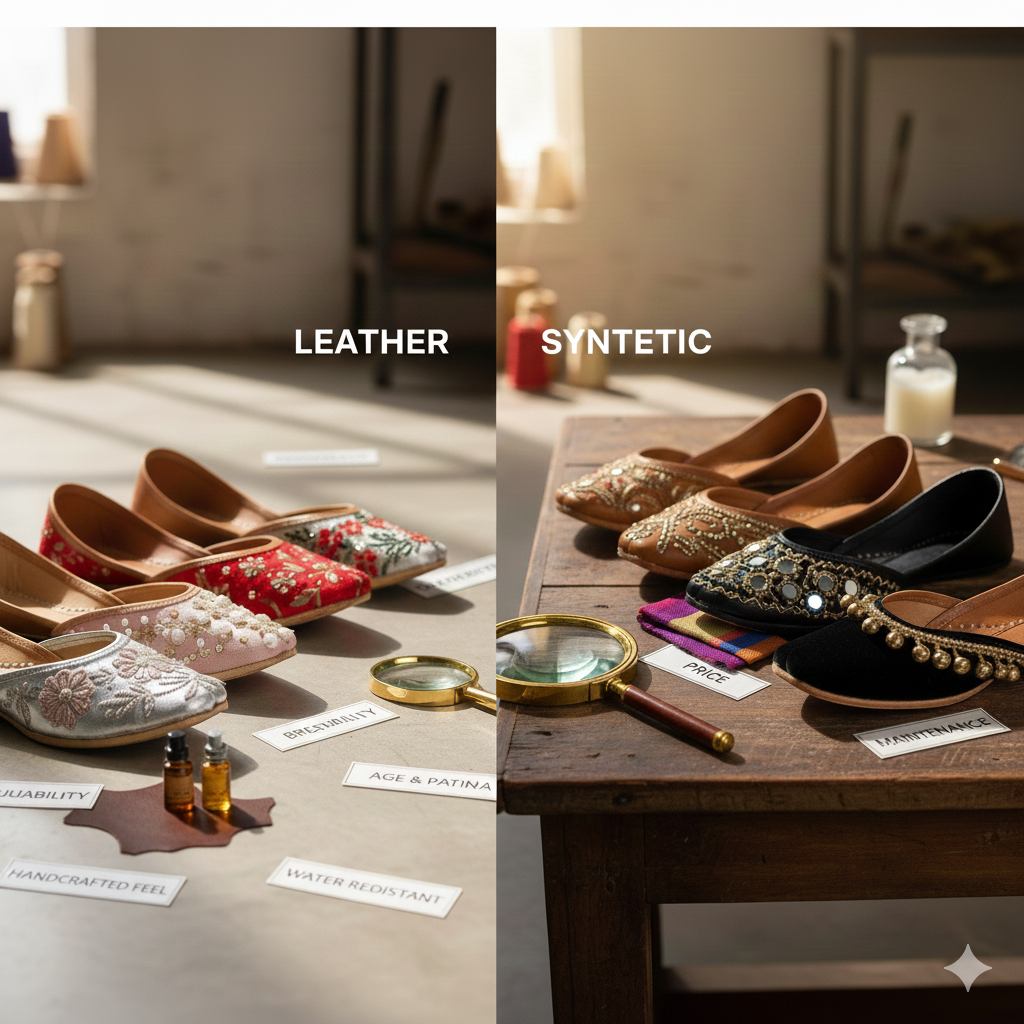
The world of ethnic footwear is filled with beautiful choices. Among these, juttis stand out as iconic traditional shoes. Today, shoppers face a significant choice. The decision between leather vs synthetic juttis shapes your experience.
This choice goes beyond simple appearance. It touches on comfort, ethics, culture, and value. Many buyers feel confused by marketing claims. They wonder which option truly serves their needs.
This guide presents eight honest truths. We cut through the noise to reveal real differences. You will learn what manufacturers don’t always highlight. Let’s explore the authentic story of leather and synthetic juttis.
1. The Breathability Battle: Leather Wins for All-Day Wear
Leather juttis have a natural advantage. Genuine leather allows air to circulate around your foot. This breathability prevents excessive sweating during long wear. It reduces discomfort in warm climates.
Traditional craftsmanship enhances this feature. Artisans often use vegetable-tanned leather. This process maintains the material’s porous nature. Your feet stay cooler and drier throughout the day.
Synthetic juttis struggle with ventilation. Most are made from plastics like polyurethane or PVC. These materials trap heat and moisture inside. This can lead to dampness and odor buildup.
Some synthetic brands add ventilation holes. These attempts rarely match leather’s natural performance. The difference becomes obvious during extended use or in summer.
For daily ethnic footwear, this truth matters. Consider your local climate and wearing schedule. Leather offers superior comfort for prolonged periods. Synthetic options might suffice for shorter occasions.

2. Durability Reality: Leather Ages, Synthetic Wears Out
Durability reveals another honest truth. Leather juttis develop character over time. High-quality leather actually improves with proper care. It develops a unique patina that many enthusiasts cherish.
The construction method supports longevity. Traditional juttis feature stitched soles and seams. These can often be repaired by skilled cobblers. A well-maintained pair can last for many years.
Synthetic juttis follow a different path. They typically look perfect when new. However, plastic materials degrade with regular use. They may crack, peel, or lose shape within a single season.
The bonding methods differ too. Many synthetic juttis use glue rather than stitching. Once these adhesives fail, repair becomes difficult. Often, the entire shoe becomes unusable.
When comparing leather vs synthetic juttis, consider the lifespan. Leather requires higher initial investment but offers better long-term value. Synthetic costs less upfront but needs frequent replacement.
3. The Comfort Timeline: Immediate vs. Gradual Adaptation
Comfort experiences differ dramatically between materials. Synthetic juttis often feel comfortable immediately. They require no “breaking in” period. This makes them appealing for special events or occasional wear.
Manufacturers design synthetic materials for instant wearability. They add cushioned insoles and flexible uppers. These features provide initial comfort without adjustment.
Leather juttis follow a different comfort journey. They may feel firm during the first few wears. This is because natural leather molds gradually to your foot shape. The breaking-in process typically takes one to two weeks.
After this period, something magical happens. Leather conforms perfectly to your individual foot contours. It creates custom comfort unmatched by synthetic alternatives. The shoe becomes uniquely yours.
Consider your patience level and wearing frequency. For occasional use, synthetic convenience might appeal. For regular wear, leather’s personalized comfort justifies the initial adjustment.
4. Environmental Impact: A Complex Calculation(leather vs synthetic juttis)
Environmental considerations reveal nuanced truths. Leather juttis have a mixed environmental profile. On one hand, leather is a natural, biodegradable material. It decomposes much faster than plastics in landfills.
Traditional vegetable tanning uses natural agents. These include tree bark and plant extracts. This process has minimal chemical impact compared to modern methods.
However, leather production has ethical considerations. It relies on animal husbandry with associated resource use. Some modern tanning processes involve harmful chemicals if not properly managed.
Synthetic juttis present different environmental challenges. They derive from petroleum-based materials. Production generates significant carbon emissions. These plastics take centuries to break down naturally.
Recycling synthetic footwear is difficult. Most contain multiple material types bonded together. This complexity makes them unsuitable for standard recycling streams.

5. Cost Analysis: Price Tag vs. True Value
Price considerations reveal important truths. Synthetic juttis generally cost less initially. Mass production and cheaper materials reduce manufacturing expenses. This makes them accessible to budget-conscious buyers.
The price advantage seems clear at purchase. However, true cost requires broader calculation. Consider cost per wear over the shoe’s lifespan. Synthetic juttis often need replacement within one or two seasons.
Leather juttis command higher prices upfront. Artisan labor, quality materials, and traditional methods increase production costs. This investment pays dividends through extended usability.
Well-maintained leather juttis can last for five years or more. When you divide the purchase price by years of service, the value becomes apparent. This makes leather economically sensible for regular wearers.
Maintenance costs differ too. Leather requires occasional conditioning products. Synthetic shoes might need complete replacement instead of maintenance. Factor these expenses into your long-term budget.
When evaluating leather vs synthetic juttis, look beyond the price tag. Consider durability, repairability, and overall lifespan. Leather often provides better economic value despite higher initial cost.
6. Cultural Authenticity: Heritage vs. Imitation
Cultural significance matters in traditional shoes. Leather juttis represent centuries of South Asian craftsmanship. Each region developed distinctive styles and techniques. These traditions continue through artisan communities.
Purchasing authentic leather juttis supports cultural preservation. You contribute to keeping traditional skills alive. The purchase connects you directly to heritage craftsmanship practices.
Synthetic juttis often replicate traditional designs. However, they lack the cultural depth of handmade originals. Production typically occurs in factories rather than artisan workshops. This distances the product from its cultural roots.
The materials themselves tell a story. Natural leather connects to traditional resource use. Synthetic materials represent modern industrial production. Each choice reflects different values and priorities.
Consider what authenticity means to you. For cultural events or meaningful gifting, leather often feels more appropriate. For fashion-forward experimentation, synthetic options provide accessible alternatives.
7. Care Requirements: Regular Attention vs. Disposable Mindset
Maintenance approaches differ significantly. Leather juttis require consistent but manageable care. Regular cleaning removes surface dirt and dust. Occasional conditioning keeps the material supple and prevents cracking.
Proper storage extends leather’s lifespan. Use shoe trees or stuff with paper to maintain shape. Store in breathable bags away from direct sunlight. These practices preserve both appearance and structure.
Synthetic juttis follow a different care pattern. They typically need only surface cleaning with damp cloths. Some can even withstand gentle machine washing. This convenience appeals to busy lifestyles.
However, synthetic materials degrade despite cleaning. The aging process involves irreversible changes. Colors fade, surfaces crack, and shapes distort over time.
Your lifestyle influences which approach works better. If you enjoy maintaining quality items, leather fits your habits. If you prefer low-maintenance convenience, synthetic may align better with your routine.
8. Versatility and Styling: Traditional Depth vs. Modern Variety
Styling possibilities reveal final truths. Leather juttis offer authentic traditional aesthetics. Natural materials develop character over time. Each pair becomes unique through wear patterns and patina development.
Traditional craftsmanship allows intricate detailing. Hand embroidery, beadwork, and stitching create depth and texture. These elements reflect regional artistic traditions across South Asia.
Synthetic juttis provide different styling advantages. They offer consistent appearance and vibrant colors. Mass production enables rapid adoption of fashion trends. New designs reach markets quickly and affordably.
Modern manufacturing allows creative experimentation. Unconventional colors, prints, and embellishments become possible. These options appeal to fashion-forward consumers seeking novelty.
Consider your wardrobe needs and personal style. Leather juttis work well with both traditional and fusion outfits. Synthetic options might better suit contemporary fashion experimentation.
Making Your Choice: Practical Considerations
Now that we’ve explored eight honest truths, how do you choose? Consider these practical questions to guide your decision about leather vs synthetic juttis.
First, assess your wearing frequency. How often will you wear these traditional shoes? Regular wearers benefit more from leather’s durability. Occasional wearers might prefer synthetic convenience.
Second, consider your local climate. Humid environments favor leather’s breathability. Dry climates might work with either material. Extreme weather conditions might require specific considerations.
Third, evaluate your budget realistically. Calculate what you can invest upfront versus long-term. Remember that quality leather becomes more economical through extended use.
Fourth, examine your ethical priorities. What matters most: animal welfare, artisan support, or environmental impact? Different buyers weight these factors differently based on personal values.
Finally, think about the occasion. Are these for daily wear, special events, or cultural celebrations? The purpose significantly influences which material serves you best.
The Future of Juttis: Blending Traditions(leather vs synthetic juttis)
The ethnic footwear industry continues evolving. Innovations blend traditional wisdom with modern technology. Some manufacturers now create hybrid juttis. These feature leather uppers with synthetic soles for urban terrain.
Sustainable practices are gaining attention across both categories. Eco-friendly leather tanning reduces chemical use. Recycled synthetic materials decrease environmental impact. These developments address previous limitations.
Consumer awareness drives positive change. Demand for transparency pushes manufacturers toward ethical practices. Support for artisans encourages preservation of traditional skills. Your purchasing decisions influence these industry directions.
Conclusion: Stepping Forward with Awareness
The debate between leather vs synthetic juttis has no universal answer. Each material serves different needs and preferences. Understanding these eight honest truths empowers your decision-making process.
Leather offers breathability, durability, and cultural authenticity. It requires investment and care but provides long-term value. Synthetic provides affordability, immediate comfort, and fashion flexibility. It suits different priorities and lifestyles.
Your perfect choice depends on personal circumstances. Consider your climate, budget, values, and wearing patterns. Both options have legitimate places in the world of traditional shoes.
The most satisfying approach might involve both materials. Invest in quality leather juttis for regular wear and special occasions. Use synthetic options for experimental fashion or specific needs. This balanced approach maximizes benefits.
Whatever you choose, step forward with awareness. Understand what you’re purchasing and why. Support ethical producers who value quality and responsibility. Your feet deserve thoughtful consideration in every step they take.
Ethnic footwear connects us to culture, comfort, and personal expression. Whether through leather’s traditional embrace or synthetic’s modern adaptability, choose what aligns with your journey. Walk confidently in your chosen path, one thoughtful step at a time.