
Table of Contents
6 Smart Ways to Compare Leather Jutti and Synthetic Shoes

Introduction
Choosing the right Indian footwear is more than a fashion decision. It’s about comfort, tradition, and sustainability. The debate between traditional ethnic shoes like leather juttis and modern synthetic shoes is common. Understanding their differences helps you make informed choices.
This guide will compare leather jutti and synthetic shoes. We will explore six key areas. You’ll learn about materials, comfort, durability, and more. Let’s dive into the world of footwear.
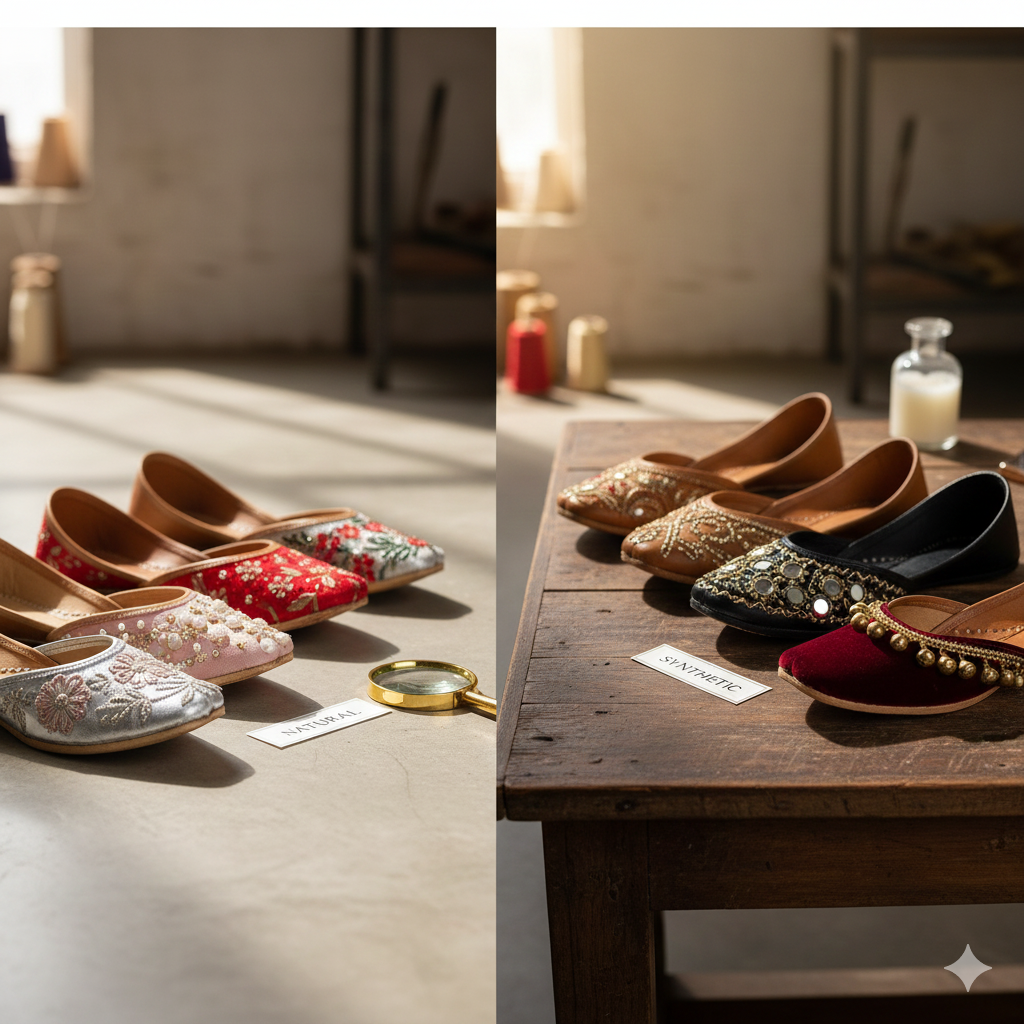
1. Material and Craftsmanship: Natural vs. Man-Made
Leather juttis represent centuries of Indian shoemaking tradition. Artisans use genuine leather from goats, camels, or buffalo. The process involves hand-cutting, stitching, and embroidery. Each pair tells a story of cultural heritage.
Synthetic shoes are products of modern manufacturing. Materials include polyurethane, PVC, and artificial leather. Machines produce them in large factories. The focus is on uniformity and cost-efficiency.
The compare leather jutti and synthetic shoes analysis starts here. Leather breathes naturally. It molds to your feet over time. Synthetic materials often lack this adaptability. They may cause sweating and discomfort.
Craftsmanship matters in ethnic shoes. Juttis feature intricate handwork like gotta patti, beads, or thread embroidery. Synthetic shoes prioritize mass production. Their designs are often printed or stamped.
Your choice depends on values. Do you appreciate artisan skills? Or do you prefer modern consistency? Both have merits in different contexts.
2. Comfort and Fit: Molded vs. Static

Comfort is crucial for Indian footwear. Leather juttis excel in long-term wear. Natural leather stretches and conforms to your foot shape. This creates a personalized fit unmatched by synthetic options.
Breathability is another advantage. Leather allows air circulation. This keeps feet cool and dry. Synthetic materials often trap heat and moisture. This can lead to odors and fungal infections.
However, synthetic shoes offer immediate comfort. They come with pre-designed arch support and cushioning. Modern technology provides gel inserts and memory foam. These features benefit those needing specific orthopedic support.
When you compare leather jutti and synthetic shoes, consider your routine. Juttis are perfect for moderate daily activities. Synthetic athletic shoes suit intense physical exercise. Each serves different comfort needs.
Break-in periods differ significantly. Leather juttis require initial wearing to soften. Synthetic shoes are ready immediately but may degrade faster. Choose based on your patience and usage patterns.
3. Durability and Longevity: Aging Gracefully vs. Wearing Out
Durability is a key factor. Leather juttis often last for years, even decades. High-quality leather improves with age. It develops a unique patina that many find appealing. Proper care includes regular cleaning and conditioning.
Synthetic shoes have a shorter lifespan. Materials break down faster with frequent use. Sun exposure and moisture accelerate deterioration. They may crack, peel, or lose shape within a year or two.
However, not all leather is equal. Genuine artisan juttis use full-grain leather. Cheap versions may use corrected leather. Similarly, some synthetic blends offer enhanced durability through advanced polymers.
Ethnic shoes like juttis are repairable. Local cobblers can restitch soles or fix embroidery. Synthetic shoes are often disposable. Repair options are limited due to glued construction and material limitations.
Consider your long-term investment. Leather juttis cost more initially but offer better value over time. Synthetic shoes are affordable upfront but require frequent replacement. Calculate cost per wear for accurate comparison.
4. Environmental Impact: Biodegradable vs. Chemical Footprint

Sustainability is increasingly important. Leather juttis have a complex environmental profile. Natural leather is biodegradable. It decomposes much faster than plastics. Traditional tanning methods used natural agents like tree bark.
Modern leather production sometimes involves chemical tanning. This raises concerns about water pollution. However, many Indian artisans still use vegetable-tanning processes. These are more eco-friendly.
Synthetic shoes rely on petroleum-based materials. Production generates significant carbon emissions. These materials take centuries to decompose in landfills. Recycling options are limited due to mixed material construction.
When you compare leather jutti and synthetic shoes, consider lifecycle analysis. Leather’s impact is front-loaded in production. Synthetic shoes create waste throughout their lifecycle. Microplastic shedding is a growing concern.
Supporting traditional Indian footwear also preserves cultural heritage. It sustains artisan communities and their knowledge. Synthetic shoe production is largely automated with minimal human craftsmanship.
Your choice reflects environmental values. Both industries are evolving toward greener practices. Research brands committed to sustainable methods regardless of material type.
5. Style and Versatility: Cultural Expression vs. Modern Trends
Style is subjective but important. Leather juttis offer timeless elegance. They come in countless regional variations across India. From Punjabi phulkari juttis to Mojari from Rajasthan, each has unique identity.
These ethnic shoes complement traditional attire perfectly. They also blend surprisingly well with contemporary fashion. Pairing juttis with jeans or dresses creates fusion looks. Celebrities and fashion influencers have popularized this trend.
Synthetic shoes dominate modern fashion categories. Sports shoes, formal loafers, and casual sneakers abound. They offer consistent styling aligned with global trends. Color options and designs are virtually unlimited.
When you compare leather jutti and synthetic shoes, consider versatility. Juttis transition from casual to semi-formal occasions effortlessly. Synthetic shoes are often activity-specific. Running shoes differ from office shoes dramatically.
Cultural significance adds intangible value. Wearing juttis connects you to Indian heritage. They’re common at weddings, festivals, and cultural events. Synthetic shoes represent globalization and contemporary lifestyle.
Your wardrobe needs should guide selection. Having both types offers maximum flexibility. Choose juttis for cultural events and light daily wear. Opt for synthetics for sports, hiking, or specific work requirements.
6. Care and Maintenance: Traditional Methods vs. Modern Convenience

Maintenance requirements differ significantly. Leather juttis need regular but simple care. Wipe with a damp cloth after wear. Use leather conditioner every few months. Stuff with paper to maintain shape when storing.
Avoid exposing leather to excessive water. Use protective sprays for occasional rain exposure. For heavily soiled juttis, professional cleaning preserves embroidery. Store in breathable cloth bags, not plastic.
Synthetic shoes are often easier to clean superficially. Most can be wiped with soap and water. Some are even machine-washable. However, deep stains can be challenging on certain synthetic materials.
Long-term maintenance favors leather. Well-maintained juttis improve with age. Synthetic materials degrade despite cleaning. Their colors fade and surfaces crack irreversibly.
When you compare leather jutti and synthetic shoes, consider your maintenance willingness. Leather requires periodic attention but rewards with longevity. Synthetics offer low-effort care but shorter lifespan.
Investment in proper care products matters. Quality leather conditioners and cleaning kits extend jutti life. For synthetic shoes, specialized cleaners prevent material degradation. Both benefit from proper storage away from direct sunlight.
Making Your Decision: Context Matters Most
No single footwear type wins universally. Your lifestyle determines the best choice. Consider these scenarios to guide your Indian footwear selection.
For office wear requiring long hours on feet, consider hybrid options. Leather juttis with added cushioning combine tradition and comfort. Some brands now offer ergonomically enhanced ethnic shoes.
For physical activities, synthetic shoes provide necessary support. Their shock absorption and grip patterns suit exercise. Leather juttis are better for light walking or stationary occasions.
Climate influences decisions significantly. In hot, humid regions, leather’s breathability prevents discomfort. In rainy areas, synthetic waterproof shoes might be practical despite environmental trade-offs.
Budget considerations are valid. Authentic leather juttis represent investment purchasing. Synthetic shoes fit tighter budgets immediately. Consider cost-per-wear calculations for true comparison.
Ethical values increasingly guide purchases. Research brands for their labor practices and environmental policies. Many Indian artisans depend on jutti production for livelihoods. Supporting them preserves cultural heritage.
The Future: Blending Traditions with Innovation
The footwear industry is evolving. Traditional and modern elements are merging creatively. Designers create juttis with synthetic soles for urban terrain. These hybrids offer cultural aesthetics with modern functionality.
Sustainable innovations appear in both categories. Plant-based leather alternatives offer new possibilities. Recycled synthetic materials reduce environmental impact. Traditional artisans adopt eco-friendly practices.
When you compare leather jutti and synthetic shoes, recognize this convergence. The future may hold the best of both worlds. Footwear that honors tradition while embracing innovation.
Consumer awareness drives positive change. Demand for ethically produced leather supports artisan communities. Request for durable synthetics pushes manufacturers toward quality. Your informed choices shape industry direction.
Conclusion: Stepping Forward with Awareness

The compare leather jutti and synthetic shoes journey reveals nuanced differences. Both have distinct advantages depending on context. Leather juttis offer cultural connection, breathability, and longevity. Synthetic shoes provide affordability, immediate comfort, and activity-specific design.
Your perfect footwear collection likely includes both types. Traditional juttis for cultural events and moderate daily wear. Synthetic options for sports, heavy rain, or specialized activities. This balanced approach maximizes benefits.
Remember that quality varies within each category. Not all leather juttis use premium materials. Not all synthetic shoes are poorly made. Research specific brands and read reviews before purchasing.
Indian footwear represents rich cultural heritage. Ethnic shoes like juttis carry stories of craftsmanship passed through generations. Synthetic shoes represent technological progress and global connectivity. Both have legitimate places in modern life.
Let your values, lifestyle, and comfort guide decisions. Whether choosing handcrafted leather or innovative synthetics, make informed choices. Your feet carry you through life’s journeys. Honor them with thoughtful footwear selection.
Step forward with awareness, tradition, and comfort in every stride.