
Table of Contents
The search for the perfect traditional shoe often leads to a disappointing compromise: style over comfort. For centuries, beautiful ethnic footwear was synonymous with painful break-in periods and sore feet after just a few hours.
But what if you didn’t have to choose? What if there was a traditional shoe that was not only rich in heritage and vibrant in design but was genuinely built for all-day wear?
Enter the Comfortable handmade mojaris. Originating centuries ago in the Mughal era, this footwear has long been the choice of royalty and commoners alike. Yet, in the modern marketplace, discerning the genuinely comfortable pairs from the mass-produced versions is the key to happy feet.
This is your definitive resource. This guide will explore exactly what makes Comfortable handmade mojaris the premier choice for traditional, all-day footwear, detailing the materials, construction, and care that define true quality.
We’ll dive deep into materials, focusing on identifying the superior quality needed for truly soft leather mojaris for daily wear. We will also break down the structural secrets that create supportive, cushioned traditional footwear for men and women.
It’s time to redefine your relationship with ethnic fashion. Let’s explore the art and science of finding the perfect pair of Comfortable handmade mojaris.
I. What Makes a Mojari Truly Comfortable? The Anatomy of Artisan Craft
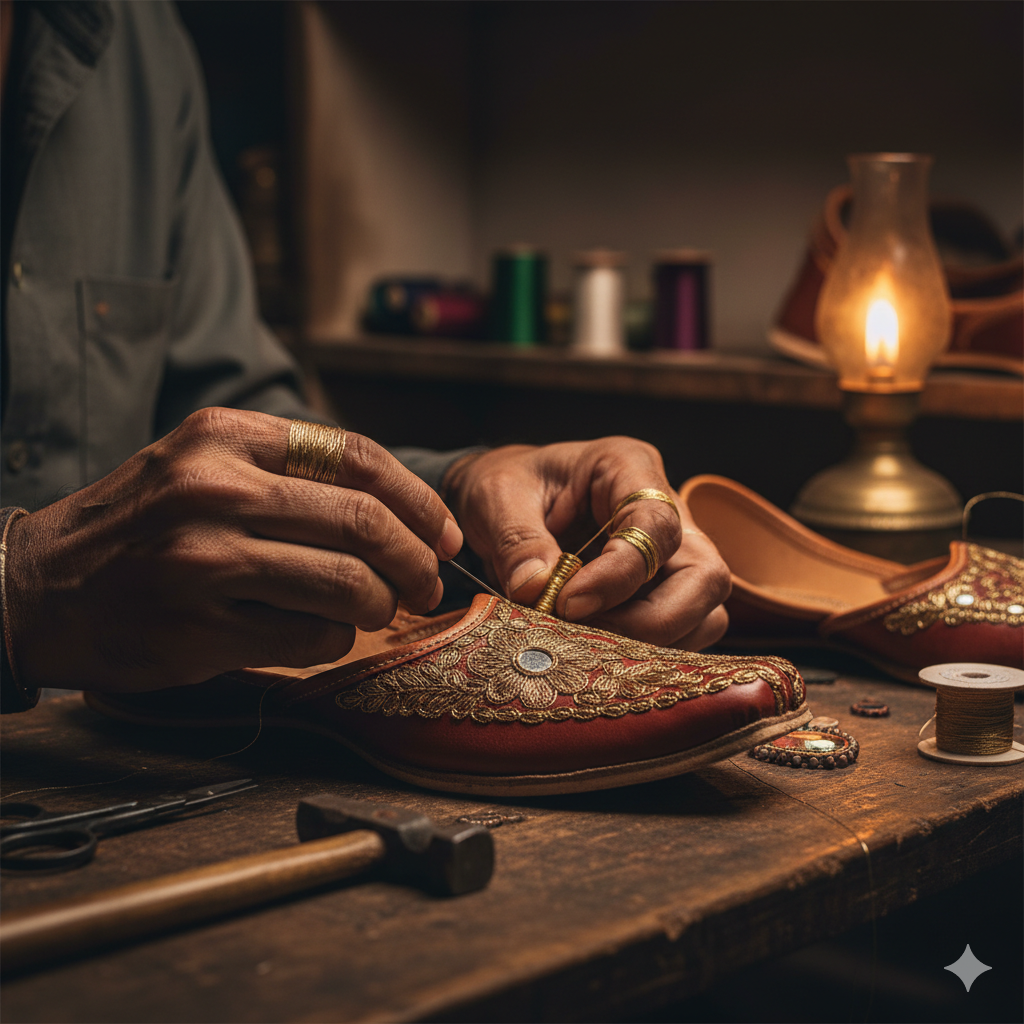
The term “handmade” is often used loosely, but for a Mojari, it is the fundamental difference between restrictive stiffness and natural flexibility. The quality and patience invested in crafting Comfortable handmade mojaris simply cannot be replicated by automated machinery.
The Lasting Difference of the Comfortable Handmade Mojaris Process
Mojaris are shaped on a wooden form called a ‘last.’ While machine-made shoes use rigid, standardized lasts, the traditional Mojari artisan uses techniques that allow the shoe to hold its shape while remaining inherently pliable. This subtle flexibility is the secret ingredient behind truly comfortable traditional shoes.
A genuinely handmade shoe is shaped and stitched in a way that allows the leather to anticipate and respond to the wearer’s foot structure. They start firm but are designed to stretch and mold, almost like a second skin.
This custom-molding capability means that your Comfortable handmade mojaris rarely result in the friction points, blisters, and pinching that are common with factory-made, synthetic footwear. It’s the hallmark of well-crafted traditional slippers.
Flexibility Over Rigidity
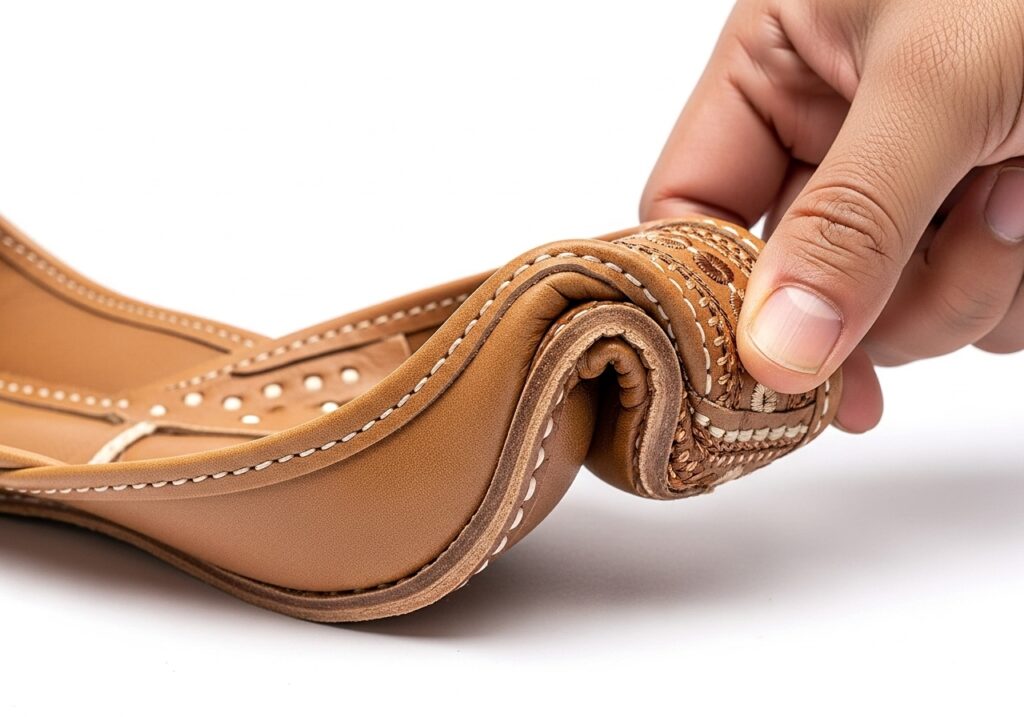
Unlike Western footwear that relies on thick, hard soles for support, the authentic Mojari uses multiple layers of compressed leather for its sole. This construction is inherently more flexible than commercial soles.
When you walk in these high-quality shoes, the sole bends exactly where your foot bends, reducing strain on your arches and tendons. It allows for a more natural, rolling gait, which is essential for all-day comfort provided by quality Comfortable handmade mojaris.
The Role of Stitching in Comfortable Handmade Mojaris
Traditional Comfortable handmade mojaris are stitched together with strong, cotton or hemp threads, often using a ‘hidden stitching’ technique known as Patti. This method joins the upper (vamp) to the sole without exposed, abrasive seams inside the shoe.
The lack of internal rough edges is a primary factor in preventing irritation. This meticulous, time-consuming process is why genuine artisan footwear feels smooth against the skin from day one. This attention to detail is what sets quality ethnic footwear apart.
II. The Material Advantage: Soft Leather and Premium Uppers
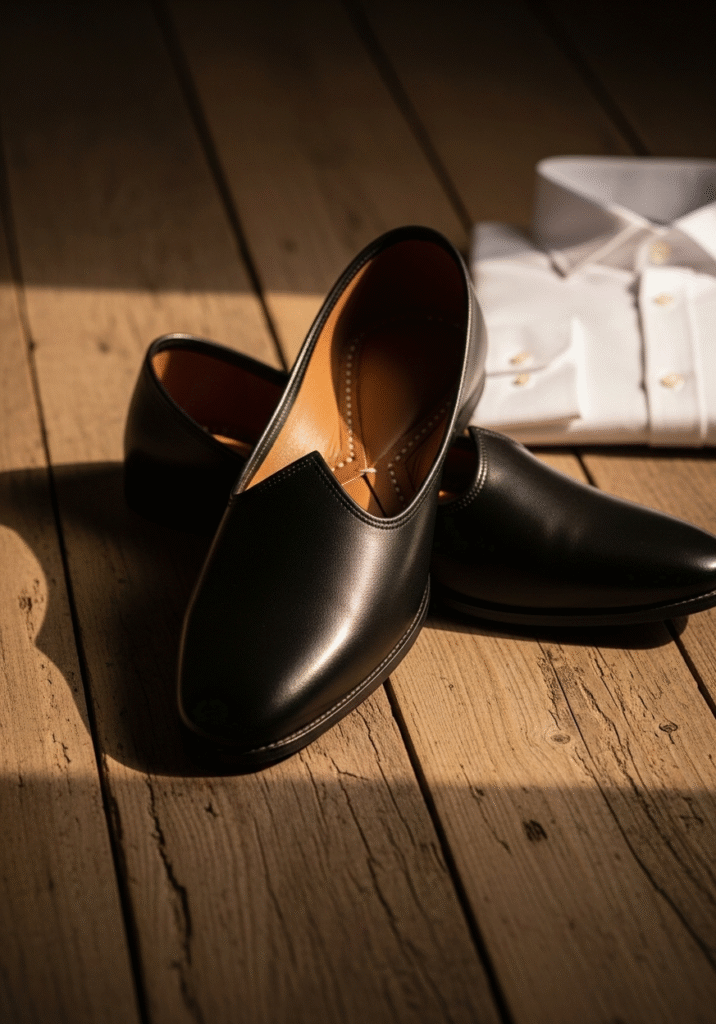
The upper material determines the breathability, flexibility, and initial comfort of the shoe. When seeking a perfect pair of Comfortable handmade mojaris, the focus must inevitably fall on the quality of the leather.
LSI Keyword Focus: Soft leather mojaris for daily wear
For those planning to use their ethnic footwear regularly, nothing beats the performance and durability of genuine leather. Specifically, soft leather mojaris for daily wear are a game-changer. These shoes embody the best qualities of durable, handcrafted footwear.
Understanding Leather Grades for Comfortable Handmade Mojaris
Not all leather is created equal, especially when comfort is the priority for your Comfortable handmade mojaris. The softest and most pliable leathers are typically used for high-quality uppers and linings:
- Sheepskin/Lambskin: Extremely soft, lightweight, and thin. It offers minimal break-in time, making it ideal for the immediate comfort of soft leather mojaris for daily wear. This material makes for exceptional traditional shoes.
- Goatskin: Slightly more durable than sheepskin but still highly flexible. It is excellent for linings and insoles because it wicks moisture naturally, enhancing the overall feeling of comfort.
- Vegetable-Tanned Cowhide: While firmer initially, vegetable-tanned leather is breathable and molds perfectly over time. For the sole of quality traditional shoes, this provides sturdy yet flexible support. This is the foundation for any durable pair of Comfortable handmade mojaris.
When shopping, always check the lining. The interior should be smooth, seamless, and preferably lined with soft leather or a smooth textile to ensure your soft leather mojaris for daily wear remain chafe-free. Only the best Comfortable handmade mojaris use these premium linings.
The Art of Tanning and Finishing for Comfortable Handmade Mojaris
The tanning process significantly affects the final feel of the product. Vegetable-tanned leather, using natural ingredients like tree bark, results in a more breathable and porous material compared to fast, chemical (chrome) tanning.
Choosing a Mojari made with naturally tanned leather ensures that the shoe will not only stretch beautifully but will also allow your foot to breathe, preventing moisture build-up that leads to discomfort and odor. This breathability is a non-negotiable feature of truly high-end Comfortable handmade mojaris.
Fabric Uppers: Style and Breathability in Handmade Footwear
While leather excels in durability, fabric Mojaris made from raw silk, velvet, or fine cotton offer a different kind of comfort—lightness and extreme breathability. These often result in lightweight, breathable shoes.
These are excellent options for summer wear or indoor events. However, they must still be constructed with a soft leather mojaris for daily wear or textile lining on the inside to prevent the embroidery or stitching from scratching the foot. A high-quality fabric Mojari still relies on a leather base and inner sole for structure.
III. Design Secrets: Cushioning and Fit (LSI #2 Focus)
Comfort is not just about softness; it’s about support. The ability of the shoe to protect the foot from hard walking surfaces is crucial, which is why the internal structure and cushioning are paramount for quality artisan shoes.
LSI Keyword Focus: Cushioned traditional footwear for men and women
Traditional footwear is often criticized for being flat and unsupportive. This perception is rapidly changing thanks to artisans who integrate modern comfort technology while preserving the traditional look. The result is supportive, cushioned traditional footwear for men and women, often rivaling modern casual shoes.
Traditional vs. Modern Cushioning in Comfortable Handmade Mojaris
Historically, the cushion in a Mojari came from tightly packed layers of leather, cloth, or felt sewn between the sole and the insole. This provided a firm, natural cushion that compacted very little over time.
Today’s premium Comfortable handmade mojaris often combine tradition with innovation:
- Layered Insoles: Still the core, but now including a thin, high-density foam or gel layer beneath the leather sock lining. This provides superior shock absorption, a feature of the best designs.
- Arch Support: While subtle, some high-end artisans incorporate a minimal arch bump into the sole structure, providing targeted support, making it truly cushioned traditional footwear for men and women.
This thoughtful layering ensures that your feet feel energized, not fatigued, after a long day of walking in your Comfortable handmade mojaris.
Addressing the Gender Divide in Artisan Footwear
While the aesthetic design of Mojaris differs significantly between genders—men’s being more robust and women’s often more delicate—the underlying comfort requirements are distinct for all quality artisan footwear:
- Men’s Mojaris: Typically require a wider toe box and a more durable, thicker sole structure to handle a heavier gait. The cushioning must withstand more pressure, ensuring the resulting cushioned traditional footwear for men and women offers lasting support.
- Women’s Mojaris: Often feature narrower vamps and sleeker lines. The comfort focus here is on preventing rubbing at the heel and ensuring the internal stitching is immaculate, especially in delicate designs. The best pairs are often designed to be worn without socks, demanding exceptional internal smoothness in these traditional slip-ons.
Regardless of gender, the essential quality of a high-comfort Mojari is its ability to remain secure on the foot without binding or slipping off the heel.
The Break-In Myth and Reality of Comfortable Handmade Mojaris
Many people dread buying ethnic shoes because of the break-in process. With genuinely Comfortable handmade mojaris, this process is minimal, often taking only a few hours of wear instead of days.
If the Mojaris are made of high-quality soft leather mojaris for daily wear, they should begin to conform to your foot almost immediately. A truly uncomfortable break-in period is usually a sign of low-quality materials or poor construction, which should be avoided when selecting your next pair.
IV. The Importance of the Sole: Foundation for All-Day Wear
The sole is the unsung hero of the Mojari. It’s what separates a beautiful display piece from a truly functional and Comfortable handmade mojaris.
The Multi-Layered Leather Sole
Authentic artisan footwear utilizes multiple layers of thick leather that are glued, stitched, and compressed together. This layered approach allows the sole to be firm enough to protect the foot yet flexible enough to roll with your natural stride.
This construction also allows for easy repair and replacement, making cushioned traditional footwear for men and women a sustainable investment. The density of these layers also naturally absorbs mild shocks, supplementing the insole’s cushioning in your ethnic footwear.
Modern Grip and Protection for Comfortable Handmade Mojaris
While traditional soles were pure leather, modern artisans often add a thin, non-slip rubber pad to the heel and forefoot area. This practical addition provides essential grip on smooth, polished surfaces and prevents excessive wear on the leather, prolonging the life of your handcrafted shoes.
This modern touch should enhance, not replace, the traditional leather structure. The majority of the sole should still be flexible leather to retain the authentic feel of genuine Comfortable handmade mojaris.
V. Care, Styles, and How to Shop Like an Expert
Investing in quality Mojaris is investing in art and comfort. To maintain their beautiful appearance and superior fit, proper care and careful selection are essential.
Essential Care for Soft Leather Mojaris for Daily Wear
Longevity and comfort go hand-in-hand. Well-cared-for leather stays supple, ensuring the shoe remains comfortable. This is key for your daily-wear shoes.
- Moisture Control: Never let your soft leather mojaris for daily wear soak in water. If these shoes get wet, stuff them with newspaper to absorb moisture and allow them to dry naturally away from direct heat or sunlight.
- Conditioning: Just like any fine leather product, Mojaris need conditioning. Use a neutral leather conditioner or a small amount of coconut oil to keep the leather soft and prevent cracking. This is particularly important for maintaining the flexibility of your Comfortable handmade mojaris.
- Storage: Store your Mojaris in a cool, dry place. Using a shoe bag prevents dust from settling into the stitching and keeps the leather breathing. Avoid stacking them, which can flatten the cushioning and crease the uppers.
Shopping Checklist: Finding the Perfect Comfortable Handmade Mojaris
When you are ready to purchase your own pair of cushioned traditional footwear for men and women, use this expert checklist to ensure you are getting genuine quality and comfort, and selecting the best artisan-made footwear available:
- Check the Interior Seams: Run your finger inside the shoe, especially around the toe and heel. You should feel no rough, exposed stitching or sharp edges. The lining should be smooth leather or a soft, flawless textile for true all-day wear comfort.
- Inspect the Flexibility: Hold the shoe by the heel and toe and gently bend it. It should offer mild resistance and then flex easily where the ball of the foot rests. A rigid, unyielding sole is a red flag for a truly comfortable shoe.
- Evaluate the Stitching (Vamp to Sole): The joining stitch should be close, even, and neat. Sloppy stitching can unravel, quickly ruining your investment.
- Confirm the Lining Material: Ask about the lining. For all-day wear, a leather-lined shoe is superior to synthetic lining due to its moisture-wicking and shaping properties, essential for quality ethnic shoes.
- Look for Cushioning: For optimal cushioned traditional footwear for men and women, check if the insole feels slightly padded when you press down. The presence of a soft, yet supportive, layer is non-negotiable for modern comfort.
Styling Your Comfortable Handmade Mojaris
The beauty of the Mojari lies in its versatility. They are no longer relegated just to weddings or festivals. Because they are now available as soft leather mojaris for daily wear, they can integrate into your everyday wardrobe seamlessly.
- Casual Fusion: Pair a simple, single-color leather Mojari with dark wash jeans, chinos, or a linen dress for a relaxed, cultured look. The high comfort level of Comfortable handmade mojaris makes this possible.
- Business Casual: Men can substitute formal loafers with finely embroidered cushioned traditional footwear for men and women when wearing kurtas or semi-formal Indian attire. These are sophisticated and comfortable.
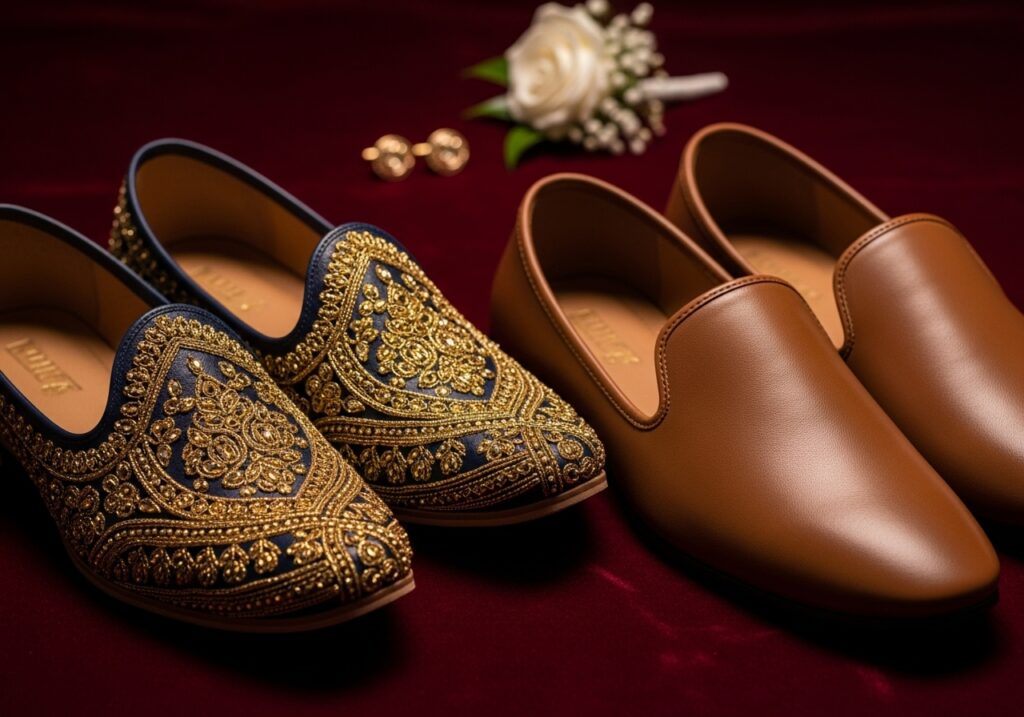
- Festive Flair: The highly decorated, metallic, or velvet pairs are perfect for formal events, offering stability and style that high heels or stiff leather shoes cannot match.
VI. Conclusion: Step into Tradition with Confidence
The ultimate goal of traditional footwear is to honor heritage without sacrificing well-being. By focusing on the material, the construction method, and the internal design, you can ensure your choice is both an aesthetic triumph and a comfort masterpiece.
The journey to find truly supportive ethnic footwear ends here. The distinction of genuine artisan-made shoes is found in the detail: the supple leather that bends with your foot, the meticulous stitching that prevents rubbing, and the purposeful cushioning that offers long-term support. Investing in a pair of high-quality Comfortable handmade mojaris is an investment in your daily comfort.
Embrace the artistry and the unparalleled comfort that defines true soft leather mojaris for daily wear and sophisticated cushioned traditional footwear for men and women. Find your perfect pair of Comfortable handmade mojaris today and experience the difference.
Have you already found your perfect pair of quality Mojaris? What is your favorite style of traditional footwear for all-day wear? Share your experiences in the comments below!