
Table of Contents
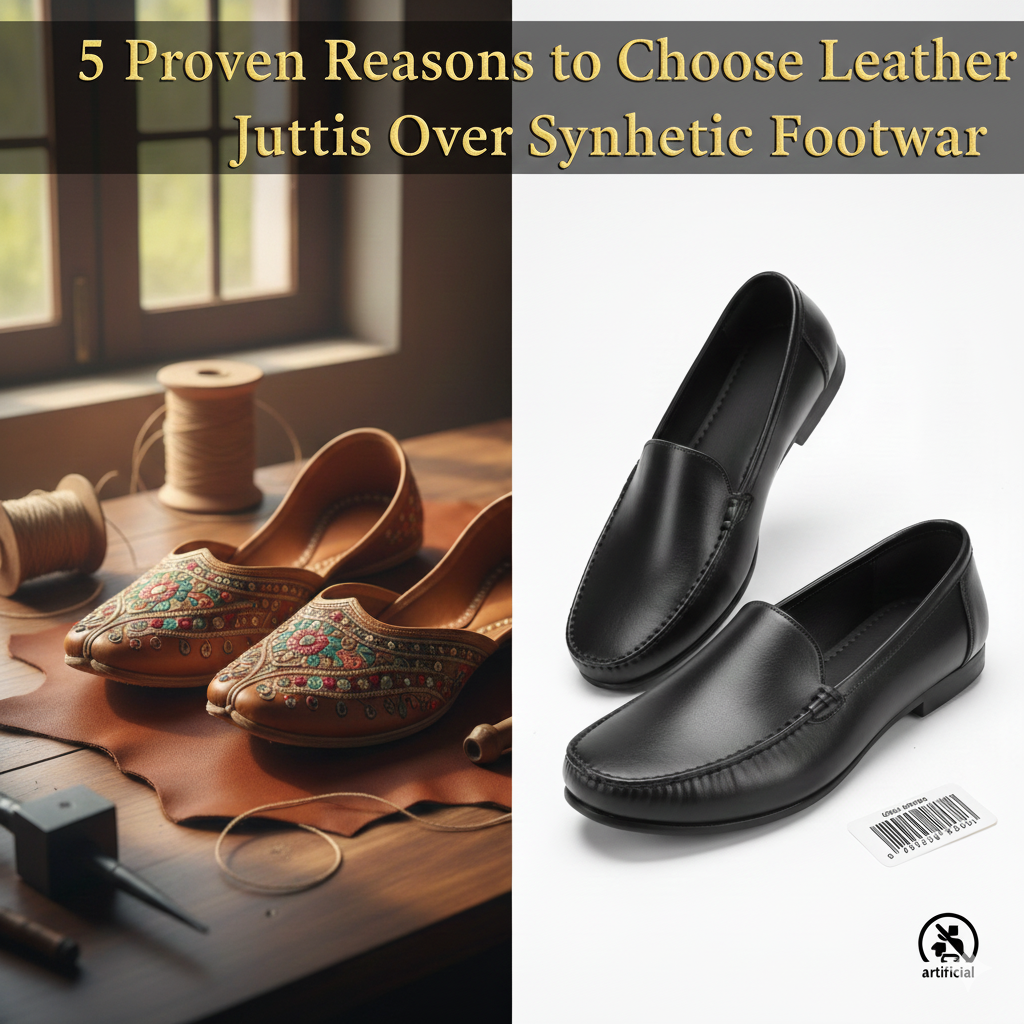
Title: 5 Proven Reasons to Choose Leather Juttis Over Synthetic Footwear
Meta Description: Discover why genuine leather juttis are a superior choice. We reveal 5 compelling reasons to choose durable, breathable handcrafted leather ethnic footwear over synthetic alternatives.
(Image 1: A high-quality split-screen image. Left: A pair of worn, synthetic shoes showing peeling material and cracks. Right: A pair of aged, polished leather juttis developing a beautiful patina. Alt Text: The durability of handcrafted leather ethnic footwear versus synthetic footwear is immediately apparent in long-term wear.)
Introduction: The Ground Beneath Your Feet Matters
In today’s world of fast fashion and mass-produced goods, every purchase is a choice between quality and convenience, between heritage and disposability. This is especially true for what we put on our feet. When considering ethnic footwear, the decision often narrows down to two paths: the authentic, timeless route of genuine leather juttis over synthetic footwear or the shortcut of cheaper, man-made alternatives. This choice impacts not just your style, but your comfort, your health, and your environmental footprint.
This blog will clearly outline five undeniable, proven reasons why choosing handcrafted leather footwear is a wise investment in every sense. We’ll explore why true leather ethnic footwear stands as a testament to quality, offering benefits that synthetic materials simply cannot replicate. It’s time to rethink what you stand on.
Reason 1: Unmatched Durability & Timeless Aging
The first and most compelling reason to choose leather juttis over synthetic footwear is longevity. Synthetic materials, like polyurethane (PU) or PVC, are fundamentally plastics. They are designed to look good initially but degrade predictably. They crack, peel, and split along stress points, often becoming unwearable after a single season or a few uses. The bond between the upper material and the sole is typically glued, failing with moisture and flexing. In stark contrast, genuine handcrafted leather is a living, natural material.
High-quality leather ethnic footwear is not just assembled; it is constructed. The leather is stitched, not merely glued, to the sole using strong threads. More importantly, leather ages with grace. Instead of deteriorating, it develops a unique patina—a soft, rich sheen that tells the story of its journeys. With basic care, a pair of leather juttis can last for decades, becoming more comfortable and characterful with each wear, making them a true “buy it for life” item.
Reason 2: Superior Breathability & Foot Health
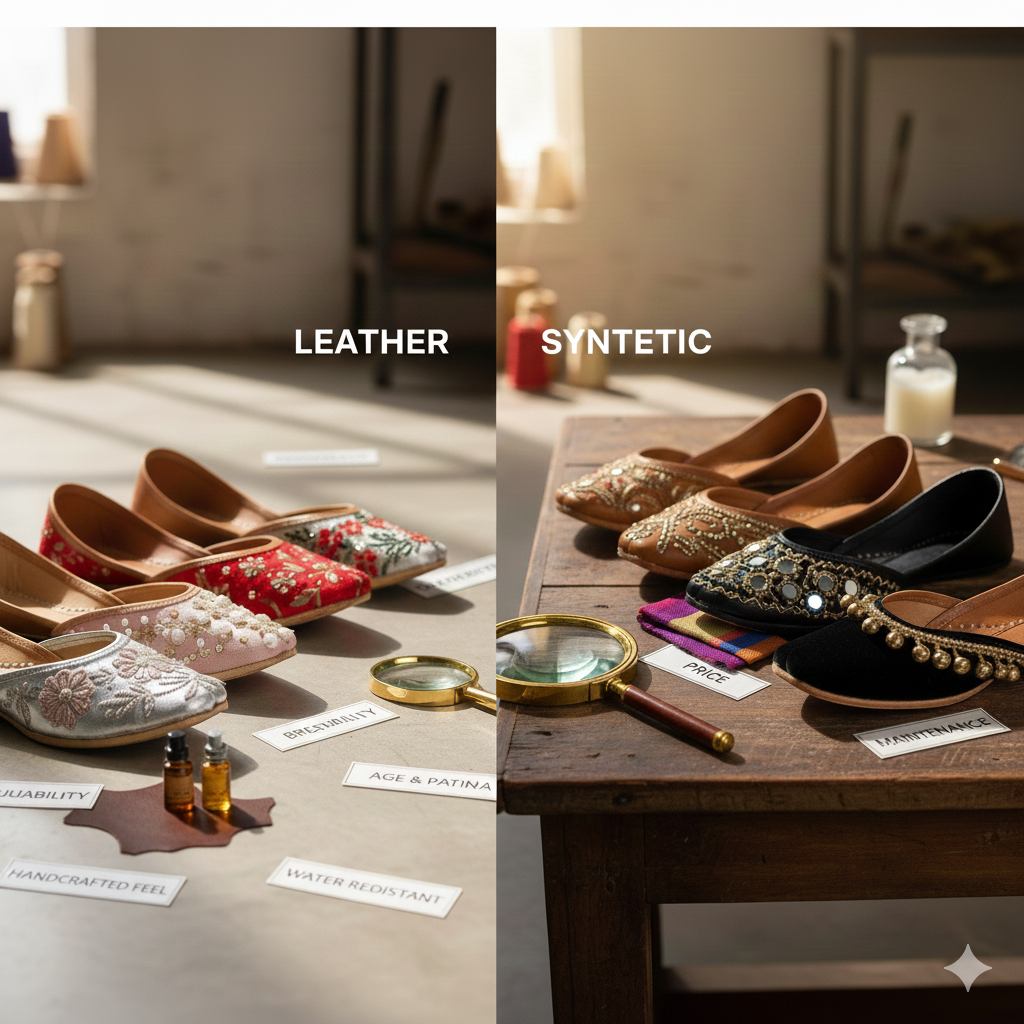
Your feet have over 250,000 sweat glands. Encasing them in non-breathable material creates a damp, warm environment—a perfect breeding ground for bacteria and fungus. This is the hidden cost of most synthetic footwear. Plastic and rubber materials trap moisture and heat, leading to unpleasant odors, blisters, and conditions like athlete’s foot.
This is where leather juttis demonstrate their biological intelligence. Leather is a porous material. It allows air to circulate naturally around your foot, wicking away moisture and regulating temperature. This intrinsic breathability is a cornerstone of handcrafted leather benefits. It keeps your feet drier, cooler, and healthier, especially crucial in warmer climates or during long wear. Choosing leather ethnic footwear is a proactive choice for foot hygiene and comfort, ensuring your feet can breathe as nature intended.
(Image 2: A macro, scientific-style photo. One side shows a magnified view of synthetic material’s non-porous, plastic weave. The other side shows the natural, porous grain structure of genuine leather. Alt Text: The breathability of handcrafted leather ethnic footwear is due to its natural pores, unlike non-breathable synthetic footwear.)
Reason 3: Unparalleled Comfort & The Custom Mold
Comfort is not a luxury; it’s a necessity. Synthetic shoes often feel comfortable in the store because of thick, uniform cushioning. However, they remain static. They do not adapt to the unique shape of your foot. Leather juttis over synthetic footwear win decisively in the long-term comfort race due to a remarkable property: leather molds to your foot.
As you wear handcrafted leather shoes, the material gently softens and stretches in response to your specific pressure points, arches, and toe splay. Over time, they form a personalized, custom fit that no pre-shaped synthetic shoe can ever achieve. This molding process creates a supportive “second skin” feel. The comfort of well-fitted leather ethnic footwear is active and evolving, reducing fatigue and providing support exactly where your individual foot needs it, making every step noticeably easier.
Reason 4: Ethical Craftsmanship & Supporting Artisan Livelihoods
Every purchase is a vote for the kind of world you want to support. The choice between leather juttis over synthetic footwear is also a choice between human hands and anonymous machines. Synthetic shoes are the epitome of industrialized, assembly-line production, often made in factories with questionable labor practices. Opting for genuine leather ethnic footwear means investing in handcrafted leather traditions.
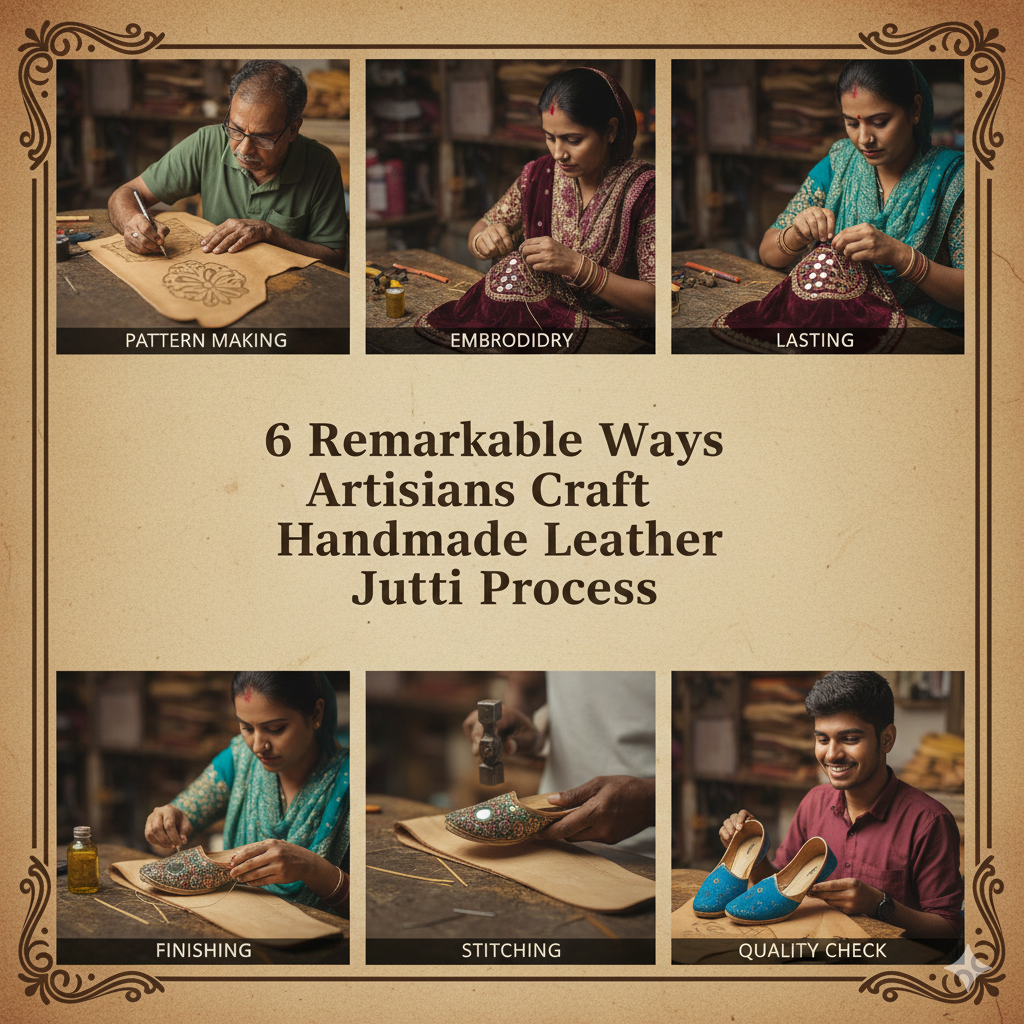
Each pair of authentic juttis represents hours of skilled labor by artisans—from the precise cutting of the hide to the meticulous hand-stitching and embroidery. By choosing leather juttis, you are directly supporting these artisan communities, preserving cultural heritage, and promoting fair wages for skilled work. You are buying a story, a piece of human history and dedication, not just a commodity. This ethical dimension adds immense intangible value to your footwear.
(Image 3: A poignant photo focusing on the weathered hands of an artisan, stained with dye, carefully hand-stitching the sole of a jutti. The tools and unfinished shoe are visible. Alt Text: Choosing handcrafted leather ethnic footwear supports artisan livelihoods, unlike mass-produced synthetic footwear.)
Reason 5: Environmental Impact & Biodegradability
In an age of environmental consciousness, the end-of-life of a product is as important as its use. This is where the argument for leather juttis over synthetic footwear becomes particularly powerful. Synthetic materials are derived from fossil fuels and are essentially forms of plastic. When discarded, they can take hundreds of years to break down in landfills, leaching microplastics into the environment throughout their slow decay.
Genuine handcrafted leather, while requiring responsible tanning processes, is a natural, biodegradable material. At the end of its long life, a leather shoe will decompose naturally, returning to the earth. Furthermore, the exceptional durability of leather ethnic footwear means you buy less often, directly combating the “throwaway culture” propagated by fast fashion. By choosing durable, repairable, and ultimately biodegradable leather, you make a more sustainable choice for the planet.
The Hidden Costs of Synthetic Footwear: A Closer Look
To fully appreciate the value of leather juttis, one must understand the true cost of their synthetic counterparts. The low initial price tag of synthetic footwear is misleading. It represents a model of planned obsolescence. You are not buying a product designed to last; you are buying a short-term rental. The need to replace synthetic shoes every few months or annually leads to a higher cumulative cost over time. Beyond money, the cost includes discomfort, potential foot health issues, and the environmental burden of frequent disposal.
The “value” is an illusion. In contrast, the upfront investment in handcrafted leather is just that—an investment. It pays dividends in cost-per-wear, daily comfort, and long-term satisfaction, making leather ethnic footwear the truly economical and responsible choice over the long arc of time.
How to Identify Genuine Leather Juttis: A Buyer’s Guide
Given the advantages, how can you ensure you’re getting authentic leather juttis over synthetic footwear imitations? First, smell it. Genuine leather has a distinct, rich, organic smell, while synthetic materials often have a chemical or plastic odor. Second, look at the edges and grain. Real leather will have irregular pores and a non-uniform texture; synthetic “leather” is often perfectly uniform.
Third, check the lining and construction. True handcrafted leather juttis often have a rough, suede-like inner finish, not a slick fabric lining. Look for visible, robust stitching attaching the sole. Fourth, feel the weight and temperature. Leather is generally heavier and feels cool to the touch initially, warming with your body heat. Synthetic feels lighter and can feel clammy. Asking the seller specific questions about the leather source and tanning process can also reveal authenticity.
(Image 4: An informative infographic-style image. It shows close-ups with labels: “Smell: Rich & Organic,” “Grain: Irregular & Natural,” “Edge: Rough & Fibrous,” “Touch: Cool & Supple.” Alt Text: A guide to identifying genuine handcrafted leather ethnic footwear and avoiding synthetic imitations.)
Caring for Your Investment: Simple Leather Jutti Maintenance
Protecting your investment in leather ethnic footwear is simple and rewarding. Regular care ensures the longevity that defines leather juttis over synthetic footwear. First, use shoe horns to put them on, preventing damage to the heel counter. Store them in a cool, dry place, using cedar shoe trees to absorb moisture and maintain shape. For cleaning, use a soft brush or damp cloth to remove dust.
Condition the leather every few months with a natural leather conditioner or a tiny amount of coconut oil to replenish its natural oils and prevent drying and cracking. For handcrafted leather with embroidery, avoid getting the threads overly wet and use a soft brush gently. If the sole wears down, a good cobbler can easily re-sole them, giving the beautiful upper many more years of life. This maintenance ritual is a small act of respect for the craft and the material.
Styling Your Leather Juttis: Versatility for Every Wardrobe
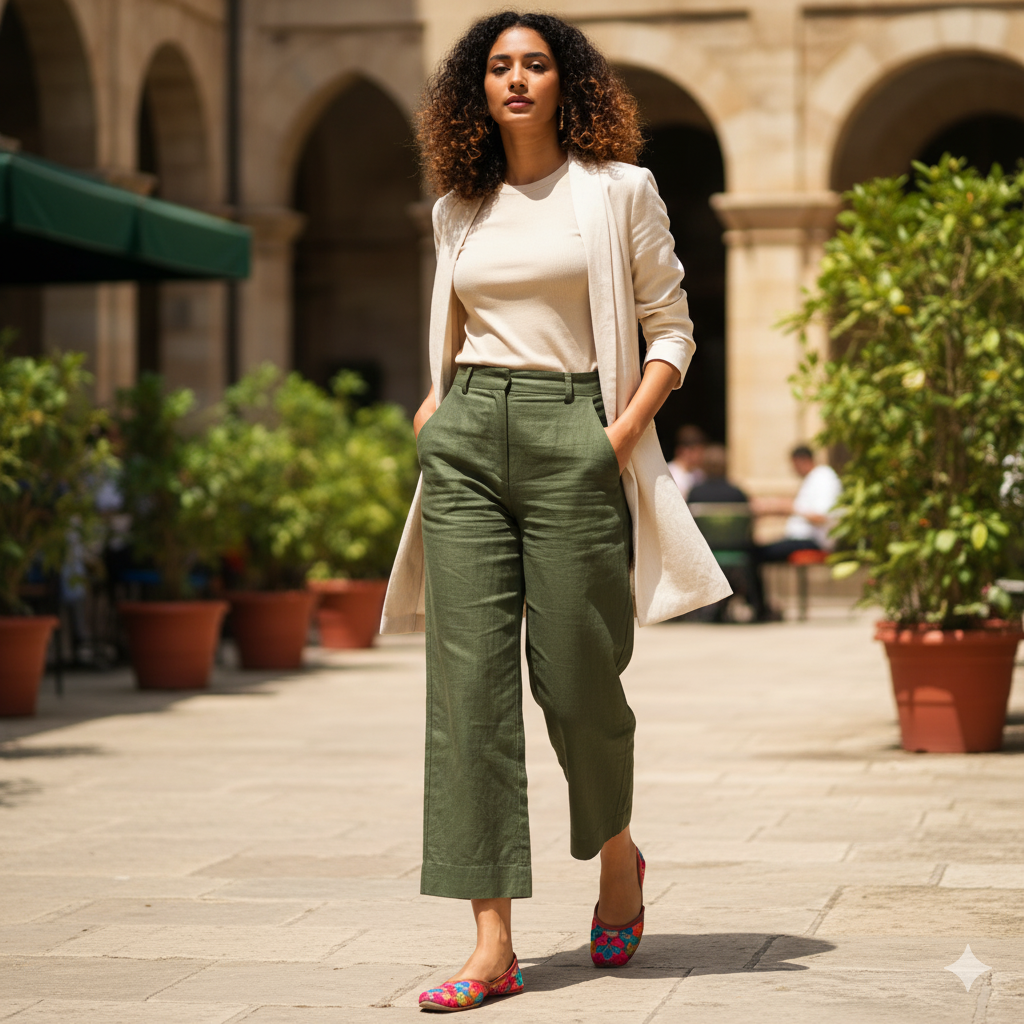
A final, powerful reason to choose leather juttis is their incredible versatility. This handcrafted leather footwear transcends the “ethnic wear only” category. The rich texture and sophisticated look of brown or black leather juttis make them perfect with tailored trousers, denim, or linen for a smart-casual look. Embroidered leather ethnic footwear adds a pop of artistry to simple dresses or monochrome outfits.
For men, classic leather juttis are a distinguished alternative to loafers or casual shoes. Their ability to blend heritage with contemporary style is unmatched. Unlike the often-loud or cheap-looking aesthetics of synthetic alternatives, leather provides a grounded, elegant base that elevates any ensemble, proving that choosing leather juttis over synthetic footwear is a decision for a more refined and adaptable personal style.
(Image 5: A stylish lifestyle photo. A person is walking in an urban setting, wearing crisp chinos and a button-down shirt, with the focus on their feet in a pair of elegant, simple brown leather juttis. Alt Text: Leather ethnic footwear like juttis offers versatile style, easily pairing with modern wardrobes far beyond synthetic footwear.)
Conclusion: Step Into Quality, Step Into Legacy
The choice is clear and consequential. Selecting leather juttis over synthetic footwear is a holistic decision that benefits you, the artisan, and the planet. It is a commitment to durability that defies throwaway culture, to breathability that prioritizes health, to comfort that molds to your life, to ethics that honor human skill, and to sustainability that considers the future.
Leather ethnic footwear is not a purchase; it’s an adoption of a legacy piece. Each pair of handcrafted leather juttis carries a narrative of natural material and human artistry—a narrative that synthetic materials can never authentically tell. So, the next time you shop for footwear, look beyond the price tag. Invest in quality, comfort, and conscience. Choose the timeless over the temporary. Take a definitive step away from the disposable and walk confidently into a world of enduring value and style. Your feet, and your future self, will thank you for generations to come.