
Table of Contents
7 Authentic Rajasthani Jutti Designs in Handcrafted Leather
The Timeless Allure of Ethnic Footwear
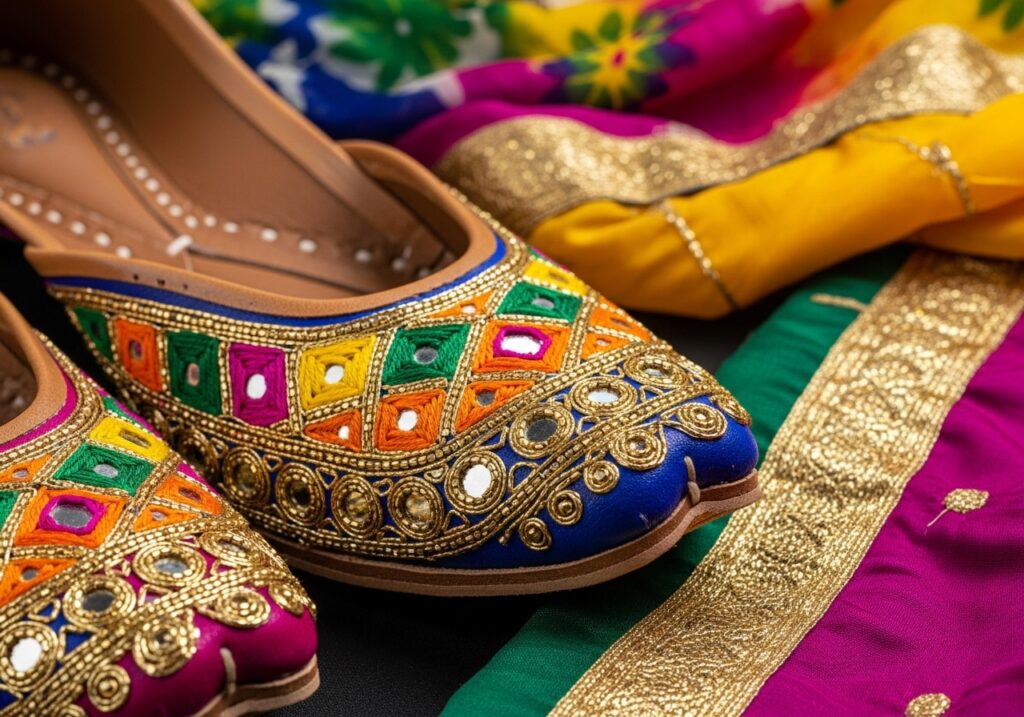
Rajasthani jutti designs represent a vibrant chapter in India’s fashion history. These ethnic footwear pieces tell stories of royal heritage and skilled craftsmanship. Handcrafted leather forms the very soul of these traditional shoes. Every pair reflects generations of artisan knowledge. The cultural significance of these shoes extends beyond mere fashion. They symbolize Rajasthan’s rich artistic legacy and enduring traditions.
The global fashion scene now embraces authentic ethnic footwear. Rajasthani jutis have emerged as a favorite choice for modern consumers. They blend comfort with unparalleled artistry. The demand for handcrafted leather products continues to grow worldwide. These shoes perfectly meet that demand. They offer a unique combination of traditional design and contemporary style. This blog explores seven authentic Rajasthani jutti designs. Each showcases the brilliance of this ethnic footwear tradition.
1. The Classic Mojari: Royal Heritage in Every Stitch
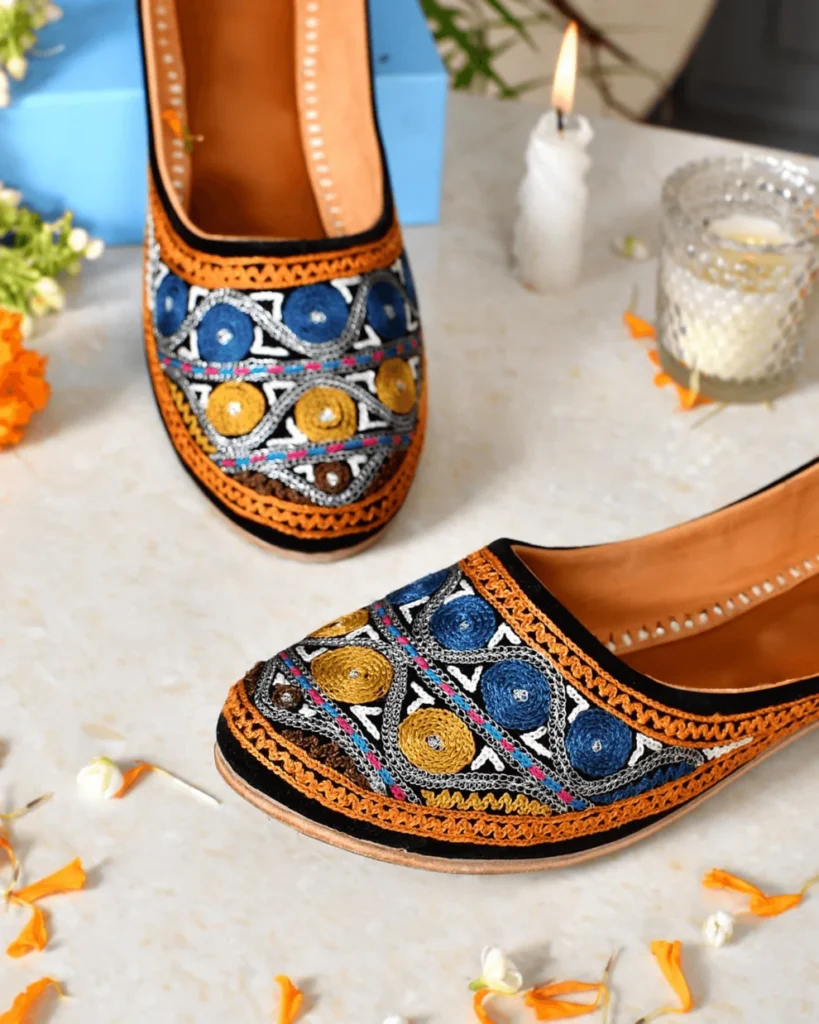
The traditional mojari stands as the cornerstone of Rajasthani jutti designs. This style originated in the royal courts of Rajasthan. Nobility and aristocracy favored these shoes for centuries. Handcrafted leather forms the base of every authentic mojari. Artisans use premium quality leather for durability and comfort. The distinctive pointed toe design makes this ethnic footwear immediately recognizable. This feature has historical and cultural significance in Rajasthani tradition.
Elaborate embroidery transforms simple leather into wearable art. Skilled craftsmen employ techniques like zardozi and gotta patti. These methods use metallic threads, beads, and sequins. The result is stunning visual appeal. Modern mojari designs maintain traditional craftsmanship. They also incorporate contemporary color palettes. This adaptation makes them suitable for various occasions. From weddings to festive celebrations, these shoes add royal elegance. The comfort of handcrafted leather ensures all-day wearability. This combination defines the enduring popularity of mojari styles.
2. Jodhpuri Jutti: Where Regal Meets Contemporary
Jodhpuri jutti designs showcase distinctive curved fronts and rich ornamentation. This style originated in the Marwar region of Rajasthan. It gained popularity among polo players and royalty. The unique shape provides both aesthetic appeal and functional benefits. Handcrafted leather construction ensures perfect fit and flexibility. Artisans pay meticulous attention to every curve and contour. This precision defines authentic ethnic footwear from Jodhpur.
Contemporary adaptations have expanded the appeal of Jodhpuri designs. Designers now experiment with unconventional materials alongside traditional leather. They incorporate mirror work, stone embellishments, and thread embroidery. These additions create stunning visual effects. The color schemes have also evolved beyond traditional hues. Modern Jodhpuri jutis feature pastels, neons, and metallic shades. This evolution demonstrates the adaptability of Rajasthani jutti designs. They maintain traditional craftsmanship while embracing contemporary trends. This balance makes them popular across generations and geographies.
3. Kundan and Stone Work Juttis: Sparkling Ethnic Footwear
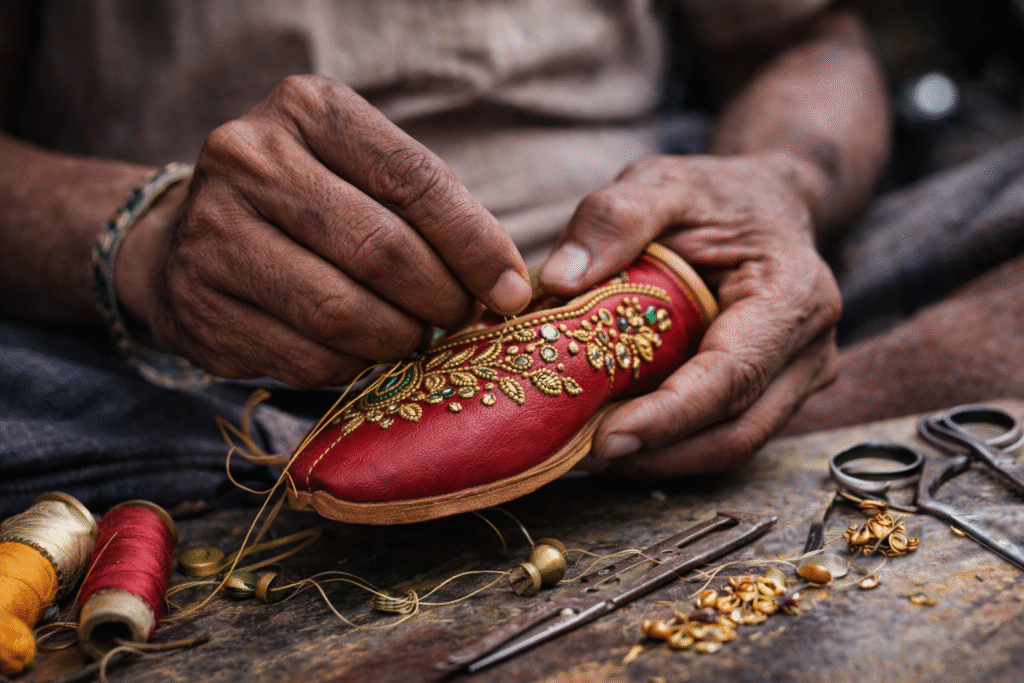
Kundan work represents the pinnacle of luxury in Rajasthani jutti designs. This traditional technique involves setting polished gemstones in gold foil. Artisans create intricate patterns using this demanding method. The result is breathtaking ethnic footwear that sparkles with every movement. Handcrafted leather provides the perfect canvas for this elaborate decoration. The contrast between matte leather and sparkling stones creates visual magic.
Mirror work and stone embellishments also characterize these designs. Small mirrors reflect light in fascinating patterns. Semi-precious stones add color and texture variation. The craftsmanship involved is remarkably detailed. Each piece is placed by hand with precision alignment. These juttis often serve as bridal footwear in Rajasthani weddings. They complement traditional attire with their opulent appearance. Modern interpretations feature smaller patterns for daily wear. This versatility maintains their relevance in contemporary fashion. The blend of handcrafted leather and sparkling embellishments defines this category.
4. Phool Patti Jutti: Floral Fantasies in Leather
Phool Patti translates to “flowers and leaves” in English. This name perfectly describes these Rajasthani jutti designs. Artisans create intricate floral and foliage patterns using various techniques. Embroidery, appliqué, and embossing methods bring nature-inspired designs to life. Handcrafted leather forms the foundation for these botanical expressions. The natural texture of leather enhances the organic feel of the patterns.
Traditional color combinations dominate phool patti designs. Vibrant pinks, greens, and yellows create striking contrasts. These colors represent Rajasthan’s lively cultural landscape. The placement of patterns follows specific aesthetic principles. Artisans balance density and negative space skillfully. This ethnic footwear category demonstrates remarkable regional variations. Different areas of Rajasthan specialize in particular floral motifs. These variations reflect local botanical influences and artistic traditions. Modern phool patti juttis incorporate abstract floral patterns. This contemporary twist appeals to younger fashion enthusiasts. The enduring appeal of nature-inspired designs ensures continuous popularity.
5. Embossed and Tooled Leather Juttis: Textured Traditions
Embossed juttis showcase the sculptural potential of handcrafted leather. Artisans use specialized tools to create raised patterns on leather surfaces. This technique requires considerable skill and experience. The pressure applied must be perfectly consistent throughout. Traditional motifs dominate embossed Rajasthani jutti designs. Geometric patterns, mythological symbols, and nature-inspired elements appear frequently. These designs often tell cultural stories through their imagery.
Tooling techniques add another dimension to ethnic footwear decoration. Artisans use punches, stamps, and carving tools to create textures. This approach creates subtle yet sophisticated visual effects. The play of light on textured surfaces enhances depth perception. These juttis often feature more monochromatic color schemes. This allows the texture to become the primary design element. The tactile quality of embossed leather adds sensory appeal. Wearers enjoy both visual and physical engagement with these shoes. Contemporary designs combine embossing with minimal embellishments. This creates balanced aesthetics suitable for modern wardrobes. The art of leather tooling continues to evolve while respecting traditional methods.
6. Contemporary Fusion Juttis: Traditional Craft Meets Modern Design
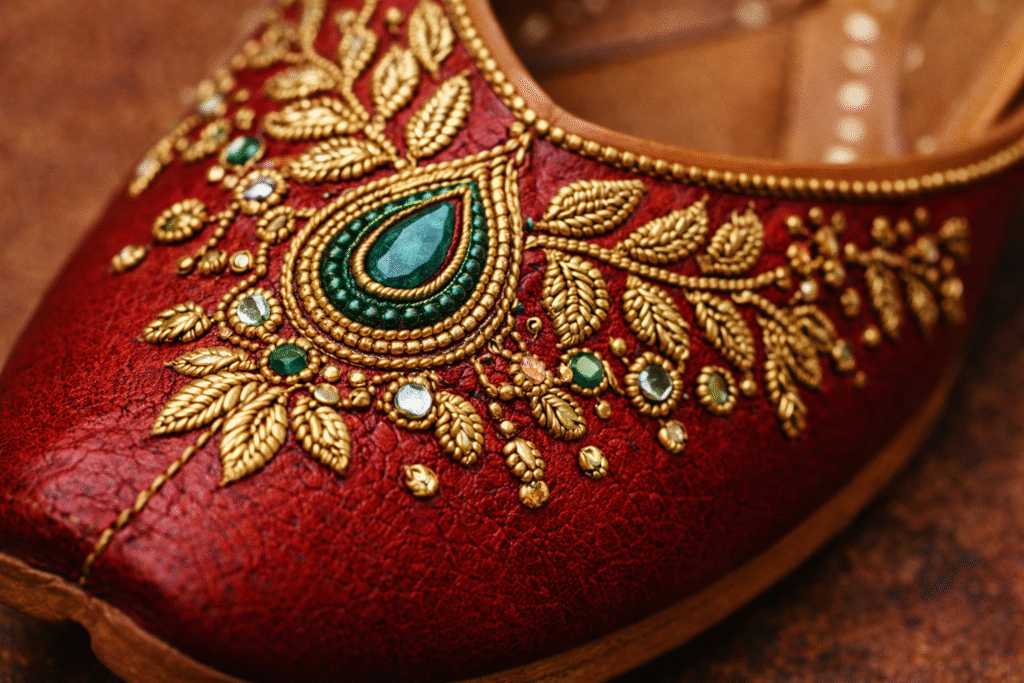
Fusion juttis represent the innovative evolution of Rajasthani jutti designs. These styles blend traditional craftsmanship with contemporary aesthetics. Designers experiment with unconventional materials alongside handcrafted leather. Fabric accents, synthetic elements, and mixed media create unique combinations. This approach expands the creative possibilities of ethnic footwear. The result appeals to fashion-forward consumers worldwide.
Western fashion elements frequently appear in fusion designs. Ballet flats, loafers, and mules incorporate traditional Rajasthani decoration. This cross-cultural exchange enriches both traditions. Color palettes have dramatically expanded beyond traditional schemes. Neutrals, pastels, and bold primaries now complement classic Rajasthani hues. Embellishment techniques have also evolved. Modern patterns, abstract designs, and minimalist approaches coexist with traditional decoration. These juttis demonstrate remarkable versatility in styling options. They pair equally well with Indian and Western attire. This adaptability explains their growing international popularity. Fusion designs ensure the continued relevance of Rajasthani craftsmanship.
7. Kolhapuri-inspired Rajasthani Juttis: A Cultural Synthesis
Kolhapuri-inspired juttis represent an interesting cultural synthesis. These Rajasthani jutti designs incorporate elements from Maharashtra’s Kolhapuri tradition. The distinctive braided leather patterns define this ethnic footwear style. Artisans create intricate woven effects using leather strips. This technique requires exceptional precision and patience. Handcrafted leather quality directly impacts the final result. Premium leather ensures durability and aesthetic perfection.
Traditional geometric patterns dominate these designs. Squares, diamonds, and zigzag motifs appear frequently. These patterns have cultural and symbolic significance in both regions. The color schemes typically feature earthy, natural tones. Brown, tan, and rust shades complement the woven textures. Contemporary adaptations introduce brighter colors and mixed materials. This evolution reflects changing fashion preferences. The comfort level of these juttis is exceptionally high. The braided construction allows natural foot movement and breathability. This makes them ideal for extended wear. The cultural fusion aspect adds narrative depth to these shoes. They represent the interconnectedness of India’s diverse craft traditions.
The Artisans Behind Handcrafted Leather Juttis
The creation of authentic Rajasthani jutti designs involves specialized artisan communities. These craftspeople inherit skills through generations of practice. Their knowledge encompasses every aspect of ethnic footwear production. From leather selection to final embellishment, each step follows traditional methods. Handcrafted leather preparation begins with careful material selection. Artisans choose hides based on thickness, texture, and quality. Natural tanning processes ensure leather durability and character.
Embroidery specialists contribute intricate decorative elements. Their needlework transforms plain leather into artistic masterpieces. Each region of Rajasthan boasts distinctive embroidery styles. These variations enrich the overall diversity of jutti designs. The collaborative nature of jutti production is noteworthy. Multiple artisans contribute to each pair of shoes. This collective effort ensures excellence in every detail. Supporting these artisan communities has significant social impact. It preserves traditional knowledge systems and provides sustainable livelihoods. Conscious consumers increasingly value this aspect of their purchases. The human stories behind handcrafted leather products add meaningful dimensions to ethnic footwear.
Caring for Your Rajasthani Juttis: Preservation Tips
Proper maintenance extends the life of Rajasthani jutti designs. Handcrafted leather requires specific care approaches. Regular cleaning prevents dirt accumulation and material degradation. Soft brushing removes surface dust without damaging embellishments. Specialized leather conditioners maintain material suppleness. These products prevent cracking and preserve natural textures. Ethnic footwear with embroidery needs additional precautions. Gentle spot cleaning protects delicate thread work and embellishments.
Storage methods significantly impact jutti longevity. Cool, dry environments prevent moisture damage. Stuffing with acid-free paper maintains shape during storage. Direct sunlight exposure causes color fading in handcrafted leather. Protective sprays create invisible barriers against stains and moisture. These products are especially valuable for frequently worn pieces. Professional cleaning services handle complex restoration needs. Experts can address specific issues like loose embellishments or leather repairs. Seasonal maintenance prepares juttis for storage during off-seasons. This proactive approach ensures years of enjoyment from ethnic footwear investments. Proper care honors the artisan effort embedded in each pair.
Styling Your Ethnic Footwear: Modern Approaches
Contemporary fashion fully embraces Rajasthani jutti designs. These versatile shoes complement diverse wardrobe choices. Traditional Indian attire naturally pairs with authentic juttis. Anarkalis, lehengas, and sarees gain enhanced elegance with matching footwear. The color coordination possibilities are virtually endless. Contrast combinations create striking visual statements. Monochromatic approaches offer sophisticated harmony. Fusion outfits benefit particularly from jutti pairings. Indo-Western garments find perfect footwear companions in these designs. The blend of traditional craftsmanship and contemporary style creates balanced aesthetics.
Western wardrobe integration demonstrates remarkable versatility. Denim combinations offer casual elegance with ethnic footwear. Bohemian dresses achieve authentic cultural accents through jutti pairings. Formal Western attire gains unique character with embellished juttis. Workplace styling has evolved to include selected jutti designs. Simpler patterns and neutral colors suit professional environments. Accessory coordination completes the stylish look. Handbags and jewelry can echo jutti colors or patterns. This attention to detail elevates overall appearance. Seasonal styling adapts to weather conditions. Summer outfits feature brighter jutti colors and lighter materials. Winter ensembles pair with richer hues and heavier embellishments. These adaptive approaches ensure year-round enjoyment of handcrafted leather footwear.
The Sustainable Choice: Ethical Fashion Benefits
Rajasthani jutti designs represent sustainable fashion choices. Handcrafted leather production follows environmentally conscious methods. Natural tanning processes minimize chemical pollution. Artisan workshops typically operate with minimal energy consumption. These aspects reduce the carbon footprint of ethnic footwear production. The durability of quality juttis supports slow fashion principles. Well-maintained pairs last for years rather than seasons. This longevity contrasts sharply with fast fashion alternatives.
The social sustainability aspects are equally significant. Purchasing authentic juttis supports traditional artisan communities. This economic support preserves cultural heritage and craftsmanship knowledge. Many jutti producers now implement fair trade principles. These practices ensure equitable compensation for skilled artisans. Transparency in production chains allows conscious consumer choices. Knowing the origin story adds value to ethnic footwear purchases. The cultural preservation dimension extends beyond economic factors. Continued demand for traditional juttis encourages intergenerational knowledge transfer. Young artisans see viable career paths in heritage crafts. This sustainability ensures the continuation of Rajasthani jutti designs for future generations.
Where to Find Authentic Rajasthani Jutti Designs
Identifying authentic Rajasthani jutti designs requires attention to specific markers. Genuine handcrafted leather exhibits particular characteristics. Natural grain variations and subtle imperfections indicate authenticity. Machine-produced alternatives lack these organic qualities. Traditional craftsmanship signs include hand-stitched seams and individual embellishment placement. These details distinguish authentic ethnic footwear from mass-produced copies.
Specialized marketplaces offer curated selections of genuine juttis. Rajasthan’s traditional markets remain primary sources for authentic designs. Cities like Jaipur, Jodhpur, and Udaipur host renowned jutti markets. These physical locations provide direct artisan interactions. Online platforms have expanded access to authentic juttis. Reputable websites specialize in traditional Indian footwear. They provide detailed craftsmanship descriptions and artisan stories. Certification markers help identify ethically produced juttis. These indicators guarantee fair artisan compensation and traditional methods. Price points reflect various quality levels and craftsmanship complexity. Understanding these variations helps make informed purchasing decisions. Investment in authentic pieces ensures long-term satisfaction and cultural contribution.
Conclusion: Stepping into Cultural Heritage
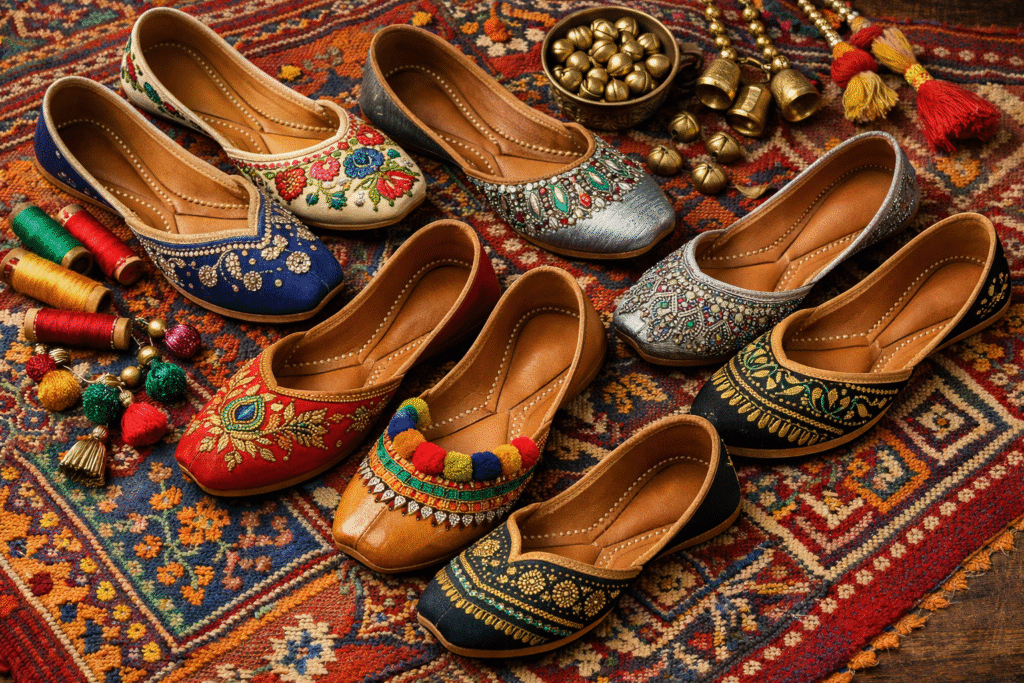
Rajasthani jutti designs offer more than just footwear solutions. They represent living cultural traditions expressed through handcrafted leather. Each style category showcases unique aspects of Rajasthan’s artistic heritage. From royal mojaris to contemporary fusion designs, the evolution continues. Ethnic footwear enthusiasts worldwide appreciate these beautiful creations. The combination of comfort, artistry, and cultural significance is unmatched.
The future of Rajasthani jutti designs appears promising and dynamic. Traditional craftsmanship adapts to contemporary fashion needs. This adaptability ensures continued relevance across generations. The sustainable and ethical aspects align with modern consumer values. Choosing authentic juttis supports important cultural preservation efforts. Every step taken in these handcrafted leather shoes connects wearers to rich artistic traditions. This connection transcends geographical and cultural boundaries. The universal appeal of beauty and craftsmanship ensures enduring popularity. Rajasthani jutti designs will continue to enchant fashion enthusiasts worldwide. They represent the perfect fusion of tradition and contemporary style. This unique positioning guarantees their place in global fashion narratives for years to come.
Image Credits (for placeholder purposes):
- Traditional jutti collection – Representing variety of Rajasthani designs
- Classic mojari close-up – Detailed gold embroidery work
- Kundan work juttis – Sparkling embellishments on leather
- Contemporary fusion juttis – Modern patterns on traditional shapes
- Styling image – Juttis with traditional attire in cultural setting
Pingback: 9 Best Rajasthani Leather Juttis for Weddings & Festive Wear - jutticrafts.online
Pingback: Handmade Jutti Techniques: 9 Rare Secrets of This Beautiful Craft - jutticrafts.online
Looking for the Selcuksportshd APK? You can find info and maybe even download the selcuksportshd apk right here online. happy streaming.