
Table of Contents
Handmade Juttis for Women: 12 Authentic Styles You’ll Love (Complete Buying Guide 2025) ✨
In the ever-evolving landscape of global fashion, few items possess the timeless allure and cultural depth of handmade juttis for women. They are not merely shoes; they are carriers of history, artifacts of royal courts, and testaments to the skill of artisans who have passed down their craft for centuries. As we step into 2025, the humble jutti has transformed from a traditional necessity into a high-fashion staple, gracing everything from celebrity weddings to corporate boardrooms.
Whether you are a bride hunting for the perfect comfortable alternative to heels or a fashion-forward minimalist seeking a pop of ethnic charm, finding the right pair is an art form in itself. This extensive guide dives deep into the world of handmade juttis for women, covering 12 authentic styles, the intricate history of the craft, expert styling tips for 2025, and a foolproof buying guide to ensure you get the perfect fit.
The Royal Legacy: A History of Handmade Juttis
To truly appreciate a pair of handmade juttis for women, one must understand their origins. The word ‘Jutti’ is derived from the Urdu word for a shoe with a closed upper attached to a sole.
From Mughal Courts to Modern Streets
The history of this footwear dates back over 400 years to the era of the Mughals and the Rajput royalty of Rajasthan. Historically, these shoes were a symbol of status. The wealthiest patrons commissioned pairs stitched with real gold and silver threads (Zari) and embellished with precious gems like rubies and emeralds.
Unlike modern mass-produced shoes, traditional juttis were—and often still are—crafted without a left or right distinction (a characteristic known as being “straight”). over time, the leather molds to the unique shape of the wearer’s foot, creating a custom fit that is undeniably yours. Today, while the real gems have been replaced by high-quality crystals and beads, the soul of handmade juttis for women remains rooted in this regal past.
Behind the Seams: The Art of Making Handmade Juttis
What makes handmade juttis for women superior to machine-made alternatives? The secret lies in the grueling, intricate process of creation. It is a labor of love that often involves an entire community of artisans.
1. The Cutting (The ‘Nakkashi’)
It begins with the Nakkar, the craftsman who cuts the leather into different shapes for the sole and the upper. In 2025, while many brands use high-quality vegan leather, the technique of precise hand-cutting remains unchanged.
2. The Embroidery (The ‘Kadhai’)
This is where the magic happens. The cut fabric (silk, velvet, or canvas) is stretched over a wooden frame. Women artisans, often working from their homes in Punjab or Rajasthan, painstakingly stitch every bead, sequin, and thread. A single pair of intricate bridal handmade juttis for women can take up to 30 hours of embroidery work.
3. The Assembly (The ‘Judaai’)
Finally, the embroidered upper is stitched to the sole using cotton threads. This stitching is done entirely by hand, ensuring a durability that glue simply cannot replicate. The result is a breathable, flexible shoe that moves with you.
12 Authentic Styles of Handmade Juttis for Women
Diversity is the hallmark of Indian craftsmanship. Here are 12 distinct styles of handmade juttis for women that are dominating the trends in 2025.
1. The Classic Tilla Jutti
The Look: Tilla is a traditional Kashmiri style of embroidery where gold or silver copper dust threads are used to create elaborate, swirling floral motifs. Why You’ll Love It: It exudes a subtle, sophisticated royalty. The metallic sheen is not jarring but glows warmly, making it perfect for those who want to look elegant without looking flashy. Best For: Formal family dinners, religious ceremonies, and festivals like Diwali.
2. Intricate Zardosi Masterpieces
The Look: Zardosi is heavy, raised metal embroidery. These handmade juttis for women are opulent, often featuring 3D motifs created by sewing bullion wire in tight coils. Why You’ll Love It: This is the pinnacle of luxury. The weight of the embroidery gives the shoe a rich feel, and it pairs seamlessly with heavy silk sarees and bridal lehengas. Best For: Brides, close family of the bride, and red-carpet events.
3. Vibrant Phulkari Patterns
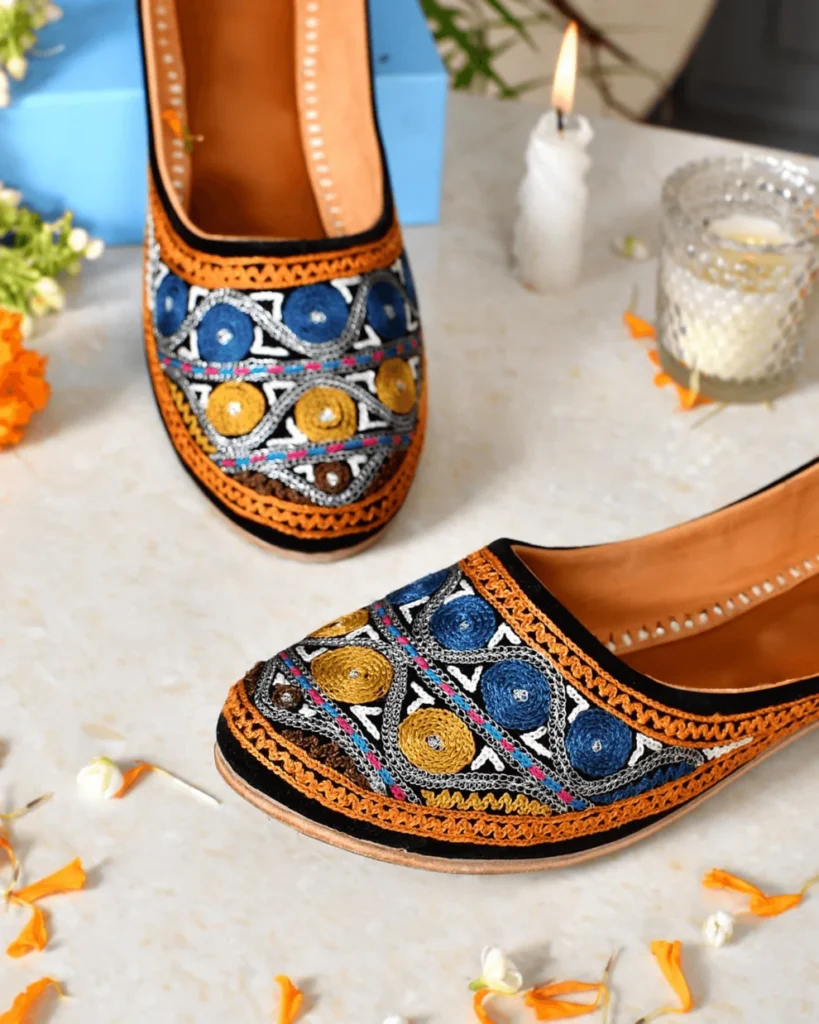
The Look: Originating from Punjab, Phulkari (flower work) uses vibrant silk floss threads to cover the entire fabric in geometric shapes. Why You’ll Love It: It is essentially a riot of colors. If you are wearing a monochrome outfit, a pair of Phulkari juttis becomes the instant hero piece of your ensemble. Best For: Sangeet nights, Lohri celebrations, and daytime events.
4. Mirror Work (Shisha) Glamour
The Look: Tiny pieces of mirrors are encased in thread work and stitched onto the jutti. In 2025, designers are using differently shaped mirrors—diamonds, teardrops, and circles—to create dynamic patterns. Why You’ll Love It: They catch the light with every step you take. Mirror work handmade juttis for women are inherently festive and add a “bling” factor that is playful and energetic. Best For: Garba nights, Dandiya, and bohemian-themed parties.
5. Minimalist Pastel Florals
The Look: A modern iteration of the classic jutti. These feature soft, pastel bases (mint, peach, lilac) with delicate thread embroidery in floral vines. Why You’ll Love It: It caters to the “Clean Girl” aesthetic. They are romantic, understated, and incredibly versatile. Best For: Office wear, brunch dates, and summer weddings.
6. Gota Patti Elegance
The Look: A Rajasthani specialty where pieces of golden ribbon (Gota) are appliquéd onto the fabric to create textures and patterns. Why You’ll Love It: It offers the golden look of Zardosi but is much lighter in weight. It is comfortable for long durations while still looking heavy and festive. Best For: Wedding guests who need to stand or dance for hours.
7. Ghunghroo Embellished Styles
The Look: These juttis feature tiny brass bells (ghunghroos) stitched onto the toe or the heel collar. Why You’ll Love It: They offer a multi-sensory experience. The soft chan-chan sound as you walk adds a rhythmic, old-world charm that is incredibly feminine. Best For: Kathak dancers, cultural performances, and anyone who loves a dramatic entrance.
8. Contemporary Denim & Pop Art
The Look: Breaking traditional barriers, these handmade juttis for women use denim as a base and feature quirky badges, beads, or hand-painted pop art (like auto-rickshaws, sunglasses, or slang words). Why You’ll Love It: It fuses Indian structure with Western cool. It’s the perfect conversation starter and shows a fun side to your personality. Best For: College, movie dates, and casual Fridays.
9. Cutdana (Beadwork) Sparkle
The Look: Cutdana refers to stones that are cut at specific angles to reflect light. These beads are stitched closely together to create a seamless, shimmering surface. Why You’ll Love It: They offer a sleek, modern shine closer to sequins than traditional thread work. They look exceptionally high-end and polished. Best For: Cocktail parties and evening receptions.
10. The “Punched” Leather (Jaali) Design
The Look: Inspired by Mughal architecture, these juttis feature leather that is laser-cut or hand-punched to create net-like (Jaali) patterns. Why You’ll Love It: They are highly breathable, making them the best handmade juttis for women for hot summer months. The look is rustic, vintage, and earthy. Best For: Daily wear, shopping trips, and travel.
11. Velvet Luxe
The Look: Deep, rich velvet in maroon, emerald, or navy blue serves as the base, usually embellished with minimal gold wire work. Why You’ll Love It: Velvet screams winter luxury. It keeps your feet warmer than canvas and looks incredibly regal in photographs. Best For: Winter weddings and evening galas.
12. Digital Print Fusion
The Look: Traditional motifs (like elephants, lotuses, or peacocks) are digitally printed on the fabric, and then highlighted with hand-embroidery. Why You’ll Love It: You get intricate storytelling detail that is hard to achieve with embroidery alone, but with the added texture of hand-work. Best For: The artsy, creative soul who loves unique prints.
Jutti vs. Mojari vs. Khussa: What’s the Difference?
When shopping for handmade juttis for women, you might encounter these terms interchangeably. However, there are subtle differences:
- Jutti: Traditionally from Punjab. They have a flat sole and are closed at the back. The front is usually rounded or slightly pointed (M-shaped).
- Mojari: Typically from Rajasthan. The key difference is the toe; Mojaris often have an extended, curled toe (known as the Nok). They tend to look more traditional and rustic.
- Khussa: This term is widely used in Pakistan and parts of Northern India. It is essentially synonymous with Jutti but often refers specifically to the style made with camel leather.
Styling Guide 2025: How to Wear Your Juttis
Gone are the days when juttis were reserved for Salwar Kameez. In 2025, handmade juttis for women are a global accessory. Here is how to style them:
1. The Corporate Chic
Ditch the uncomfortable pumps. Pair a beige or tan punched leather jutti with your cigarette trousers and a crisp linen blazer. It adds character to your workwear without breaking the dress code.
2. The Boho Traveller
Wearing a maxi dress or a cotton skirt? Slip on a pair of mirror-work juttis. Add a tote bag and silver jewelry, and you have the perfect vacation look.
3. The Denim Duo
Jeans and juttis are a match made in heaven. Cuff your boyfriend jeans at the ankle to show off the embroidery of a Phulkari or Pop Art jutti. This works beautifully with a simple white t-shirt.
4. The Fusion Bride
Modern brides are prioritizing comfort. Many are opting for customized handmade juttis for women with their wedding date or “Pataka Bride” embroidered on the back. Wear these for the Pheras or the after-party dancing.
Comprehensive Buying Guide: Finding the Perfect Pair
Buying handmade juttis for women online can be tricky if you don’t know what to look for. Use this checklist to ensure you don’t end up with a return.
1. Sizing and The “Break-In” Period
Juttis do not have a left or right foot initially; they take the shape of your foot after 1-2 weeks of wear.
- Measure Correctly: Place your foot on a white paper, trace the outline, and measure the longest toe to heel in centimeters.
- The Thumb Rule: If you have wide feet, always size up. Traditional juttis have a narrow front.
- The Stretch: Remember that genuine leather stretches. A snug fit is good initially, but a painful fit means you need a larger size.
2. Sole Quality & Padding
This is the biggest differentiator in 2025.
- Look for: “Double cushioning” or “Memory foam padding.” Traditional juttis had hard leather soles that were tough on knees. Modern handmade juttis for women should feel like walking on clouds.
- Anti-Slip: Ensure the sole has some texture or a rubber grip added, as pure leather soles can be slippery on tiled floors.
3. Material Integrity
- Vegan Options: If you are ethically conscious, look for “Cruelty-Free” or “Faux Leather” labels. The quality of vegan leather has improved drastically and is now as durable as animal leather.
- Breathable Lining: The inner lining should ideally be cotton or soft faux leather to absorb sweat. Avoid plastic linings as they cause blisters.
Care and Maintenance: The Longevity Guide
A good pair of handmade juttis for women can last for years if treated right. Because they are often made with delicate threads and leather, they require specific care.
- Wrap it Up: Never leave them out in the open. Dust settles into the embroidery and dulls the shine. Keep them wrapped in the muslin cloth bag provided by most sellers.
- Moisture is the Enemy: Leather absorbs water, which can ruin the shape and cause fungus. If they get wet, stuff them with newspaper and let them air dry naturally. Never use a hairdryer.
- The Mustard Oil Hack: If a new pair feels hard or is biting your heel, dip a cotton ball in mustard oil or coconut oil and rub it on the inner lining of the shoe overnight. This softens the leather instantly.
- Dry Clean Only: For heavily embroidered Zardosi or silk juttis, do not try to wash them. Professional dry cleaning is the safest option.
Sustainability and Ethical Fashion
In 2025, consumers are more conscious than ever. Buying handmade juttis for women is a sustainable choice for several reasons:
- Low Carbon Footprint: The production involves minimal machinery and electricity.
- Biodegradable: Traditional leather juttis are biodegradable, unlike synthetic sneakers that sit in landfills for centuries.
- Empowering Artisans: When you buy a pair, you are directly supporting the livelihoods of rural artisans (Karigars) in North India, keeping a dying art form alive.
Frequently Asked Questions (FAQ): Handmade Juttis for Women
Q1: Can handmade juttis for women be worn in the rainy season? Ideally, no. While vegan leather handles water better than animal leather, the intricate embroidery and glue can be damaged by excessive moisture. Save them for dry days.
Q2: I have flat feet. Are juttis good for me? Yes, but be selective. Look for brands that explicitly mention “arch support” or specialized padding. Standard traditional juttis are completely flat and might be uncomfortable for long walks without added insoles.
Q3: How do I clean white or pastel fabric juttis? Spot cleaning is key. Use a mild fabric cleanser or shampoo mixed with water. Dip a toothbrush in the solution and gently scrub the dirty area. Wipe with a clean, damp cloth and let it dry.
Q4: Do juttis stretch over time? Yes. Leather is a natural material that relaxes. If your juttis feel slightly tight around the toes when you first wear them, they will likely become comfortable after 3-4 wears.
Q5: What is the price range for good quality handmade juttis? It varies. A decent daily-wear pair can start from $20 (₹1,500), while intricate designer or bridal handmade juttis for women can range from $50 to $150 (₹4,000 – ₹12,000) depending on the handwork involved.
Conclusion: Step Into Tradition
The resurgence of handmade juttis for women in 2025 is a beautiful reminder that true style is timeless. These shoes offer a unique blend of comfort, versatility, and heritage that modern footwear often lacks. Whether you are walking down the aisle or walking into a boardroom, there is a jutti style designed to elevate your journey.
Investing in a pair is not just about upgrading your shoe closet; it is about owning a piece of art that tells a story. So, measure your feet, choose your style—be it the sparkly Mirror work or the elegant Tilla—and step out with the grace of royalty.
Ready to find your perfect fit? Browse our latest collection of handcrafted wonders and give your feet the royal treatment they deserve!
Pingback: Indian Handmade Jutti Process: 8 Incredible Secrets of a Dying Art - jutticrafts.online